



















11050 - Instructions
Keep searches simple. Use keywords, e.g. "leaking", "pump", "broken" or "fit".
Although the motor was running, washer wouldn't agitate or spin.
After disconnecting the electrical supply, first remove the two screws at either end of the control panel and fold it back away from the washer top. Then, unplug the electrical lid switch connection. Now, remove the two clips at either end on top to disconnect the housing from the washer back and chassis. The motor is sandwiched between the water pump in the front and transmission at the rear. The Direct Drive Coupling connects the rear motor shaft to the transmisson. After you have taken the outter portion of the washer off, remove the two snap clips that hold the water pump in place and slide the pump off the front shaft. Best to also disconnect the upper hose connection so the pump can be moved out of the way. Caution though, remaining water in tub will drain out. Now remove the two screws that hold the clips in place which secure the motor to the transmission. Careful, as the old Direct Drive Coupling is probably destroyed, the clips are the only thing holding the motor in place and the motor needs to be supported so it won't drop to floor when the clips are removed. Be careful not to lose the four rubber grommets which sit between the motor and transmission bracket. After motor is on floor remove the old plastic slip-on direct drive coupling discs from both the motor and transmission shafts. The new replacement discs have steel centers which do not slide onto the shafts as easily as the old plastic ones did. I had to tap the center steel portion onto the shafts using a hammer and a deep wall socket the same width as the steel portion of the disc. Be careful! I'm sure that tapping the plastic portion of the disc to properly seat it on the shaft will break it away from the steel portion. In my case, It took me several attempts to completely seat the new discs. I had to do quite a bit of tapping to get the discs seated far enough onto the shafts so that the motor slipped easily against the transmission bracket grommets and the retainer clips snapped back into place easily. Reassembly is simply reversing the steps you took when taking the unit apart. Before putting the outter housing back in place, I checked to make sure everything was running smoothly by jumping out the electrical snap-in connection for the lid switch and running the machine in the spin cycle. Remember, if you don't jump out the lid switch and just try to test the unit in the aggitate cycle, the machine has to first fill with water.
Parts Used:
-
Thomas from Commack, NY
-
Difficulty Level:A Bit Difficult
-
Total Repair Time:30 - 60 mins
-
Tools:Pliers, Screw drivers, Socket set, Wrench set
20 of 24 people
found this instruction helpful.
Was this instruction helpful to you?
Thank you for voting!
Lid safety switch defective . Lid would not lock allowing washer operation.
Remove small screws on back of top on both sides, slide top forward. No need to remove water hoses. Lift top up to expose switch safety mechanism (black plastic) on front underside of top. Undo screws holding switch mechanism. remove plate cover from back of top and unplug wiring harness. Thread new wireing harness and plug through hole in top and plug in to plug receptor.
Parts Used:
-
Garry from CANON CITY, CO
-
Difficulty Level:Easy
-
Total Repair Time:30 - 60 mins
-
Tools:Screw drivers, Socket set
19 of 21 people
found this instruction helpful.
Was this instruction helpful to you?
Thank you for voting!
washer did not agitate
popped thecap off removed the bolt, pulled agitator off replaced cogs(dogs) then put back together. works like new.whole time took about 10-15 min. saved my self 150.00 by not hireing repair man.
Parts Used:

-
Eric from Jacksonville, FL
-
Difficulty Level:Really Easy
-
Total Repair Time:Less than 15 mins
-
Tools:Socket set
21 of 28 people
found this instruction helpful.
Was this instruction helpful to you?
Thank you for voting!
Washer would fill up, wash, then stop
I deduced the lid switch was the problem.
I removed the two screws holding the control panel on. Pulled the control panel back.
Disconnected the ground wire of the lid switch.
removed the two top clamps that hold the panel to the top of the machine.
Pulled back the casing (outside of the washer) and placed it on it's side on the floor. Here I could reach the switch. Removed old, installed new and reversed the process.
The part that gave me the biggest problem was setting the casing back on to the frame. You have to slide the front part in at the bottome, then lean back the rest of it.
I removed the two screws holding the control panel on. Pulled the control panel back.
Disconnected the ground wire of the lid switch.
removed the two top clamps that hold the panel to the top of the machine.
Pulled back the casing (outside of the washer) and placed it on it's side on the floor. Here I could reach the switch. Removed old, installed new and reversed the process.
The part that gave me the biggest problem was setting the casing back on to the frame. You have to slide the front part in at the bottome, then lean back the rest of it.
Parts Used:
-
Glen from Plano, TX
-
Difficulty Level:A Bit Difficult
-
Total Repair Time:30 - 60 mins
-
Tools:Screw drivers
22 of 31 people
found this instruction helpful.
Was this instruction helpful to you?
Thank you for voting!
washer wouldn't start up after filling & closing lid
First I loosened the 2 screws on the outside of the top control assembly with a philips screwdriver. Then I took out the 2 other screws toward the top on the back with a socketwrench.Next I removed the top so I could access the switch. After that I removed the broken switch and unhooked from wire hareness. I then hooked up the new switch and snapped into place. Last I put the top back on and screwed into place.
Parts Used:
-
Jeremy from Marengo, IA
-
Difficulty Level:Easy
-
Total Repair Time:15 - 30 mins
-
Tools:Screw drivers, Socket set
20 of 26 people
found this instruction helpful.
Was this instruction helpful to you?
Thank you for voting!
Drum was binding because of worn bearing supporting front of dryer drum
First I unplugged the dryer for safety, then I removed the top of the dryer, then removed the 2 hex head screws holding the font door panel onto the dryer. Then I disconnected the door safety switch. the rest was cake. I removed the old bearing and cut the new bearing and seal to the exact size of the old one. I used contact cement to glue the new bearing and seal into place. Reassembly was a breeze. End of job. Success!!!
Parts Used:
-
Leslie from Townsend, GA
-
Difficulty Level:Easy
-
Total Repair Time:1- 2 hours
-
Tools:Nutdriver, Pliers, Screw drivers
23 of 35 people
found this instruction helpful.
Was this instruction helpful to you?
Thank you for voting!
Temperature setting not working
Took off back cover, thermostat was easily identified because of photos I've seen on website. Took 2 connectors off, removed 2 screws and removed old thermostat. That was pretty much it!
NOTE: Replacement thermostat 694674 has an adjustable temperature range setting that MUST be manually set prior to installing! You need to use the enclosed chart to find your original part# and make sure the setting is matched. My original part# 341146 had a "D" setting so I had to change but very easy to do.
NOTE: Replacement thermostat 694674 has an adjustable temperature range setting that MUST be manually set prior to installing! You need to use the enclosed chart to find your original part# and make sure the setting is matched. My original part# 341146 had a "D" setting so I had to change but very easy to do.
Parts Used:
-
Robert from Buffalo, NY
-
Difficulty Level:Easy
-
Total Repair Time:30 - 60 mins
-
Tools:Nutdriver, Screw drivers
19 of 23 people
found this instruction helpful.
Was this instruction helpful to you?
Thank you for voting!
The Dryer would not start
First and most important was to unplug the unit.
I removed the 2 screws that hold the lint screen shoot to the top cover and then simply popped the top of the machine open using 2 screw drivers and
gently prying it up. I raised the top cover about 8 inches and supported it with a block of wood.
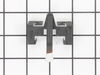
I opened the front loading door and removed the 2 screws that hold the door actuator switch while holding the switch on the inside so that nothing would fall down into no mans land. Once the switch was loose I pulled it into view and could see that the actuator spring was broken. I used the search at the Part Select Web site and found the placement part very easy. I was amazed that the part was shipped and delivered to my house the very next day. The actuator spring simply snaps into place and I assembled it in the reverse order of removal, I removed the block of wood and snapped the top back into location and reinstalled the 2 screws for the lint screen shoot . I plugged the dryer in and it work perfect. I can't say enough about how well the experiance with Parts Select went, I will recommend them to others.
I removed the 2 screws that hold the lint screen shoot to the top cover and then simply popped the top of the machine open using 2 screw drivers and
gently prying it up. I raised the top cover about 8 inches and supported it with a block of wood.
I opened the front loading door and removed the 2 screws that hold the door actuator switch while holding the switch on the inside so that nothing would fall down into no mans land. Once the switch was loose I pulled it into view and could see that the actuator spring was broken. I used the search at the Part Select Web site and found the placement part very easy. I was amazed that the part was shipped and delivered to my house the very next day. The actuator spring simply snaps into place and I assembled it in the reverse order of removal, I removed the block of wood and snapped the top back into location and reinstalled the 2 screws for the lint screen shoot . I plugged the dryer in and it work perfect. I can't say enough about how well the experiance with Parts Select went, I will recommend them to others.
Parts Used:
-
Dennis from Redondo Beach, CA
-
Difficulty Level:Really Easy
-
Total Repair Time:Less than 15 mins
-
Tools:Screw drivers
17 of 18 people
found this instruction helpful.
Was this instruction helpful to you?
Thank you for voting!
Top Half of Agitator would not function without appying sideways pressure
Heard about the website... 1 minute to find it, 10 minutes to order new cogs... 3 day wait for new parts... Rec'd Fedex, 15 minutes total to pull the agitator cover (bleach dispenser) then the bung cover with o-ring (just lift out) expose bolt, unskrew and remove top portion of agitator or entire agitator if it's easier. Seperate, remove black cog holder (slides up the spindle) and replace cogs one at a time just like the old ones. Reassemble in reverse and you are back in business. Saved the $75 deductible on my home appliance warrenty. You guys are the best... cheers...
Parts Used:
-
Donald from Fredericksburg, VA
-
Difficulty Level:Really Easy
-
Total Repair Time:15 - 30 mins
-
Tools:Socket set
18 of 21 people
found this instruction helpful.
Was this instruction helpful to you?
Thank you for voting!
Agitator was barely agitating. Making a clicking noise.
Removed agitator cap. Removed bolt inside with socket wrench. Located plastic cogs Pulled out old cogs and slid in new cogs and put back together and works great. Easy to take apart and put back together. Very cheap repair. Cogs less that $4.00 plus shipping. Shipped next working day.
Parts Used:
-
Charmaine from Slidell, LA
-
Difficulty Level:Easy
-
Total Repair Time:15 - 30 mins
-
Tools:Socket set
17 of 18 people
found this instruction helpful.
Was this instruction helpful to you?
Thank you for voting!
Would not spin
Remove the nut from the top of the motor shift inside of wsher. then remove the wire harness plug. Take out three bolts side the shaft and motor out. Replace clutch and install in reverse order.
Parts Used:

-
floyd from Slidell, LA
-
Difficulty Level:Easy
-
Total Repair Time:1- 2 hours
-
Tools:Pliers, Screw drivers, Socket set
24 of 40 people
found this instruction helpful.
Was this instruction helpful to you?
Thank you for voting!
Top section of agitator not turning
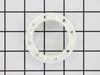
Found directional gogs broken. Searched washer model # on PS.com and easily found schematic drawing. Received parts in a couple of days. Removed agitator with one nut, and other parts just pulled apart. Replaced the cogs and other parts which were not really broken....just worn. Everything went back together easily, and I was done! Parts Select saved me a LOT of time, and especially money, than if I had called a repair co. THANKS!
Parts Used:


-
John from Stone Mountain, GA
-
Difficulty Level:Really Easy
-
Total Repair Time:15 - 30 mins
-
Tools:Socket set
17 of 20 people
found this instruction helpful.
Was this instruction helpful to you?
Thank you for voting!
My washer lid lock light kept blinking and the washer would not start
I followed the online video, removed the old part and replaced it with the new part. My washer is working perfectly. It took about an hour to reset.
Parts Used:
-
Janice from GREENVILLE, NC
-
Difficulty Level:Really Easy
-
Total Repair Time:30 - 60 mins
-
Tools:Pliers, Screw drivers
16 of 17 people
found this instruction helpful.
Was this instruction helpful to you?
Thank you for voting!
One day, I found my dryer continued running after I opened the door. And next day, it stopped working at all. I thought it was time to buy a new one, since my dryer had been used for more than 15 years. But I was curious to know what went wrong, and recalled my friend told me he repaired the door
My daughter found the video on youtube, which showed step by step repairing procedures. I just followed it and fixed my dryer in 15 min.
Parts Used:
-
Xiaobin from Cordova, TN
-
Difficulty Level:Really Easy
-
Total Repair Time:Less than 15 mins
-
Tools:Screw drivers, Wrench set
17 of 21 people
found this instruction helpful.
Was this instruction helpful to you?
Thank you for voting!
Washer will agitate, but won't spin
I ordered the switch, which is what most people told me the problem was. I didn't have a multimeter, so I couldn't test the current one.
I removed the two screws from above the lid switch, removed the control panel screws on either side, and used a flat screwdriver to pry the top off by popping the clips.
The switch was easy to reach, and I compared the old and new switch after removing the paddle assembly. The new switch has three prongs, whereas my old one had two, so I put the gray wire terminal onto the bottom prong. I set everything down, plugged it in, and tested it, but still no spin cycle.
After some further research, I realized the problem was with the spin solenoid under the washer, or the red wire that leaves the lid switch and goes to the spin solenoid, also called a wig-wag solenoid. (This is a belt driven model, not direct drive.) It's not too common that the solenoids fail, but it is rather common that the wires break inside the insulation on this model.
Moral of the story is always ohm through the switches and wires before ordering replacement parts. (Remember, never ohm through a live circuit.)
I removed the two screws from above the lid switch, removed the control panel screws on either side, and used a flat screwdriver to pry the top off by popping the clips.
The switch was easy to reach, and I compared the old and new switch after removing the paddle assembly. The new switch has three prongs, whereas my old one had two, so I put the gray wire terminal onto the bottom prong. I set everything down, plugged it in, and tested it, but still no spin cycle.
After some further research, I realized the problem was with the spin solenoid under the washer, or the red wire that leaves the lid switch and goes to the spin solenoid, also called a wig-wag solenoid. (This is a belt driven model, not direct drive.) It's not too common that the solenoids fail, but it is rather common that the wires break inside the insulation on this model.
Moral of the story is always ohm through the switches and wires before ordering replacement parts. (Remember, never ohm through a live circuit.)
Parts Used:
-
Mandie from Lewisville, NC
-
Difficulty Level:Really Easy
-
Total Repair Time:Less than 15 mins
-
Tools:Screw drivers
18 of 24 people
found this instruction helpful.
Was this instruction helpful to you?
Thank you for voting!