
















MDB3100AWE Maytag Dishwasher - Instructions
Keep searches simple. Use keywords, e.g. "leaking", "pump", "broken" or "fit".
Water under the dishwasher
1. I removed the covers below the door and watched during a wash cycle to see where the water was leaking. There was a small pinhole on the rubber connector at the end of what turned out to be the "top shower hose". I was hoping I could just replace that rubber connector, but apparently it is permanantly attached to the entire "top shower hose" assembly.
2. To remove the top shower hose I first turned of the circuit breaker to the dishwasher.
3. I needed to slide the dishwasher about half way out of the cabinet, requiring removal of two screws at the top of the dishwasher attaching it to the counter.
4. I also had to turn off the water and disconnect the water supply hose (at supply valve, not inside the washer) because it had no slack to allow the dishwasher to slide out of the cabinet.
5. I removed the hose clamp at the bottom of the dishwasher.
6. I removed the top dish rack (there are clips on the ends of the rails that can be opened to allow the rack to come out).
7. I popped off the upper washer arm by fiddling with the clip mechanism. Then I removed the threaded "nut" holding the hose in place.
8. As others mentioned, it is good to remember to save and re-use the hose clamp and rubber washer.
9. Removed the old hose.
10. Ordered new hose, waited for delivery. Kids washed dishes by hand for a few days.
11. Installed the new hose. Replaced the rubber washer at the top end and fastened with the "nut." Replaced the washer arm and top dish rack.
12. Connected the bottom end of hose, re-using the hose clamp.
13. Positioned dishwasher back under cabinet and replaced screws.
14. Re-connected the water supply hose.
15. Turned circuit breaker back on.
16. Began using dishwasher again. Observed a few wash cycles to ensure no leaks.
17. Re-attached the covers below the door.
18. Done.
2. To remove the top shower hose I first turned of the circuit breaker to the dishwasher.
3. I needed to slide the dishwasher about half way out of the cabinet, requiring removal of two screws at the top of the dishwasher attaching it to the counter.
4. I also had to turn off the water and disconnect the water supply hose (at supply valve, not inside the washer) because it had no slack to allow the dishwasher to slide out of the cabinet.
5. I removed the hose clamp at the bottom of the dishwasher.
6. I removed the top dish rack (there are clips on the ends of the rails that can be opened to allow the rack to come out).
7. I popped off the upper washer arm by fiddling with the clip mechanism. Then I removed the threaded "nut" holding the hose in place.
8. As others mentioned, it is good to remember to save and re-use the hose clamp and rubber washer.
9. Removed the old hose.
10. Ordered new hose, waited for delivery. Kids washed dishes by hand for a few days.
11. Installed the new hose. Replaced the rubber washer at the top end and fastened with the "nut." Replaced the washer arm and top dish rack.
12. Connected the bottom end of hose, re-using the hose clamp.
13. Positioned dishwasher back under cabinet and replaced screws.
14. Re-connected the water supply hose.
15. Turned circuit breaker back on.
16. Began using dishwasher again. Observed a few wash cycles to ensure no leaks.
17. Re-attached the covers below the door.
18. Done.
Parts Used:
-
Kurt from North Ogden, UT
-
Difficulty Level:Easy
-
Total Repair Time:1- 2 hours
-
Tools:Screw drivers, Wrench (Adjustable)
43 of 44 people
found this instruction helpful.
Was this instruction helpful to you?
Thank you for voting!
Roller Broken On Top Rack, Left Side.
First, removed end cap in steel sliding upper rail, second, removed broken roller, third, attached new roller, you can look at other rollers to see how it goes on, fourth, feed new roller into track, replace end cap. Takes less than 10 min, saved 85. 00 Bucks.
Parts Used:
-
Fred from Cherryville, NC
-
Difficulty Level:Really Easy
-
Total Repair Time:Less than 15 mins
66 of 128 people
found this instruction helpful.
Was this instruction helpful to you?
Thank you for voting!
Broken roller on rack
Took off old part. Modified new roller w'knife. Found a nut and bolt in scrap pile. Attached.
Parts Used:
-
donald from Westminster, CO
-
Difficulty Level:A Bit Difficult
-
Total Repair Time:30 - 60 mins
-
Tools:Pliers, Screw drivers
65 of 129 people
found this instruction helpful.
Was this instruction helpful to you?
Thank you for voting!
The dishwasher wouldn't fill with water.
I first turned off the water to the dishwasher, then the electricity to it, then took off the front bottom access panel, I then unbolted the inlet valve from the side of the machine, undid the electrical hookups remembering which one connected to which, then unclamped the two hoses, I then put the new one back in place, redoing the hoses and electrical and bolting it back to the side of the machine, then putting the front bottom access panel back on, then turning back on the water and electicity. The one thing that may make it easier if you can is to pull the dishwasher out from under the cabinets and lay it down so the bottom is exposed. This would make the process a little smoother.
Parts Used:
-
Jared from Rutland, VT
-
Difficulty Level:Easy
-
Total Repair Time:15 - 30 mins
-
Tools:Wrench (Adjustable)
34 of 36 people
found this instruction helpful.
Was this instruction helpful to you?
Thank you for voting!
Door switches were worn. Diswasher would not operate unless extreme pressure was applied to the door.
I pulled the interior of the door until I was able to get to the switches on the door latch. I determined at least one switch was completely worn while the other worked minimally. I then looked for the latch assembly and found out that it was no longer available. So I did some searching and found the exact switches I needed from PartSelect. The switches came in about 3 days which then I installed them. The dishwasher powered right up and stayed on. So in the end it was much cheaper to repair this unit than buy a new one right now. Plus, my wife is happy and so am I. Thanks PartSelect for carrying the parts I needed.
Parts Used:
-
James from Rochester, NY
-
Difficulty Level:Easy
-
Total Repair Time:15 - 30 mins
-
Tools:Screw drivers, Socket set
37 of 48 people
found this instruction helpful.
Was this instruction helpful to you?
Thank you for voting!
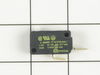
Water Valve would not open to allow water into DishWasher
First, I removed the foot plate(s) at the bottom of the Dishwasher. (2 screws each side)
Then I removed the two top screws at the front of the dish-washer. The screws were mounted into a board under the counter that had broken loose. (A minor secondary issue specific to my situation.)
I gently inched the dishwasher out from under the cabinets.
SLOWLY, I tipped the dishwasher over on its side, allowing the water still inside to drain into a pan. Minor cleanup required for the cup or two that missed.
I then had access to the part. I disconnected the power from the wall socket, and I closed the valve for the inlet water from under the sink.
I removed the screws holding the Water Valve to the DishWasher case. Then I took a sharpie and marked one side of one of the two power connectors, black-mark to black-mark.
When I went to disconnect the inlet pipe, there was more dripping than I expected, so the valve under the sink was not closing completely. I needed to shut off the water supply to the house for the next stage.
I disconnected the inlet water supply, which continued to drip slightly into a bucket. I then removed the coupler from the old water valve. It was badly clogged and corroded, so I went to a local HW store and found an exact match 3/8" to 3/8" right angle coupler with compression fitting on one end.
BIG TRICK, before installing the new coupler, WRAP the compression fitting threads with teflon tape. You will not be able to wrap it once it is installed. In fact, I needed to uninstall the part once after I discovered this, to wrap the threads smoothly.
Once pre-wrapped, wrap the other threads that screw into the water valve. Tighten until secure, AND aligned with the direction of the flow tubes of the original.
Match the electrical connectors, black-mark to the same position as before. (The new water valve will NOT have the black-mark on it, unless you transfer one!)
Connect the Water valve back to the Dish Washer chassis with the two screws previously removed.
Connect the inlet water back to the compression fitting with the pre-wrapped threads.
Gently return the dishwasher to upright, and then plug it in.
Open the valve under the sink slowly and watch for drips or leaks.
Run the dishwasher at the start of a cycle, long enough to determine that the valve activates, and allows water to flow. Then stop the cycle.
Gently walk the dishwasher back under the counter, observing that you do not kink the copper water inlet pipe, or the drain pipe.
Adjust the feet, if necessary, back to fully support and level the dishwasher.
Install the two screws holding the dishwasher to the cabinet front. Then install the kick plates and tighten those 4 screws.
Clean up any residual water from the process.
Then I removed the two top screws at the front of the dish-washer. The screws were mounted into a board under the counter that had broken loose. (A minor secondary issue specific to my situation.)
I gently inched the dishwasher out from under the cabinets.
SLOWLY, I tipped the dishwasher over on its side, allowing the water still inside to drain into a pan. Minor cleanup required for the cup or two that missed.
I then had access to the part. I disconnected the power from the wall socket, and I closed the valve for the inlet water from under the sink.
I removed the screws holding the Water Valve to the DishWasher case. Then I took a sharpie and marked one side of one of the two power connectors, black-mark to black-mark.
When I went to disconnect the inlet pipe, there was more dripping than I expected, so the valve under the sink was not closing completely. I needed to shut off the water supply to the house for the next stage.
I disconnected the inlet water supply, which continued to drip slightly into a bucket. I then removed the coupler from the old water valve. It was badly clogged and corroded, so I went to a local HW store and found an exact match 3/8" to 3/8" right angle coupler with compression fitting on one end.
BIG TRICK, before installing the new coupler, WRAP the compression fitting threads with teflon tape. You will not be able to wrap it once it is installed. In fact, I needed to uninstall the part once after I discovered this, to wrap the threads smoothly.
Once pre-wrapped, wrap the other threads that screw into the water valve. Tighten until secure, AND aligned with the direction of the flow tubes of the original.
Match the electrical connectors, black-mark to the same position as before. (The new water valve will NOT have the black-mark on it, unless you transfer one!)
Connect the Water valve back to the Dish Washer chassis with the two screws previously removed.
Connect the inlet water back to the compression fitting with the pre-wrapped threads.
Gently return the dishwasher to upright, and then plug it in.
Open the valve under the sink slowly and watch for drips or leaks.
Run the dishwasher at the start of a cycle, long enough to determine that the valve activates, and allows water to flow. Then stop the cycle.
Gently walk the dishwasher back under the counter, observing that you do not kink the copper water inlet pipe, or the drain pipe.
Adjust the feet, if necessary, back to fully support and level the dishwasher.
Install the two screws holding the dishwasher to the cabinet front. Then install the kick plates and tighten those 4 screws.
Clean up any residual water from the process.
Parts Used:
-
Bob from Allen, TX
-
Difficulty Level:A Bit Difficult
-
Total Repair Time:1- 2 hours
-
Tools:Nutdriver, Screw drivers, Wrench (Adjustable)
32 of 44 people
found this instruction helpful.
Was this instruction helpful to you?
Thank you for voting!
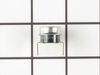
Dishes Weren't Getting Clean
I surfed the net using phrases like "dishes not clean" and found a series of possible solutions. When I noticed that the water in the washer was cold, I realized it was a heating element issue. Using a multi-meter set to the lowest resistance I tested both ends of the heating element (OF COURSE I SHUT OFF ELECTRICITY TO THE DISHWASHER FIRST!!!) and found it read a steady 16 ohms. Then I followed the orange leads to the limiter, removed the leads and tested resistance and found it at near zero. Touchdown.
I ordered the new limiter, had it in a couple of days and installed in in 5 minutes. The hardest part was putting the metal cover back on the bottom of the unit.t
I ordered the new limiter, had it in a couple of days and installed in in 5 minutes. The hardest part was putting the metal cover back on the bottom of the unit.t
Parts Used:
-
Allen from Columbia, SC
-
Difficulty Level:Really Easy
-
Total Repair Time:Less than 15 mins
-
Tools:Pliers, Screw drivers
27 of 33 people
found this instruction helpful.
Was this instruction helpful to you?
Thank you for voting!
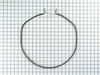
Changed the heating element
I first disconnected power from the dishwaher at the breaker panel. Then, removed 4 screws on the front of the dishwasher and removed the lower panel. I removed the two wires (compression fittings, by hand). Then I used an adjustable wrench to remove the two nuts which retained the element. I opened the diswasher door and extracted the old element. I reused the rubber O-rings from the old element and placed the new element into the dishwasher. I replaced the nuts and wires. I reenergized the circuit and ran the diswasher through a normal cycle. Note: I had plenty of towels on hand just in case the old O-rings did not perform. No problems encountered. I replaced the front cover and loaded have checked under for leaks during the last two wash cycles. Note: be sure not to over tighten the element nuts as they are plastic and will strip out. I used the model number to obtain the new part and all went flawlwssly. Thans!
Parts Used:
-
Ron from Osage Beach, MO
-
Difficulty Level:Really Easy
-
Total Repair Time:15 - 30 mins
-
Tools:Screw drivers, Wrench (Adjustable)
25 of 29 people
found this instruction helpful.
Was this instruction helpful to you?
Thank you for voting!
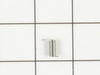
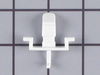
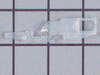
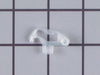
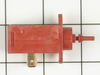
Dispenser lid would not open
The wax motor seemed to work.
At first I thought something was broken and I tried to figure out the "theory of operation" Working the actuator of the wax motor, I COULD NOT GE THE LATCH TO MOVE THE WAY I THOUGHT IT SHOULD. I ASSUMED EITHER IT WAS BROKEN IN SOME WAY I COULD NOT DETECT OR THERE WAS A FLAW IN ITS DESIGN!
It took a long time to figure out the latch would not be worked open unless it was actually holding the lid- this positions the latch at "half mast" and allows the mechanism to "pick it up from there" and open the rest of the way. So once I figured that out, I concluded the failure was really just worn out parts that were out of tolerance for how this "half mast" position and opening was supposed to work. So I ordered all fresh pieces just to be sure, assembled it (very easy) and put it in (easy). It all works fine now.
At first I thought something was broken and I tried to figure out the "theory of operation" Working the actuator of the wax motor, I COULD NOT GE THE LATCH TO MOVE THE WAY I THOUGHT IT SHOULD. I ASSUMED EITHER IT WAS BROKEN IN SOME WAY I COULD NOT DETECT OR THERE WAS A FLAW IN ITS DESIGN!
It took a long time to figure out the latch would not be worked open unless it was actually holding the lid- this positions the latch at "half mast" and allows the mechanism to "pick it up from there" and open the rest of the way. So once I figured that out, I concluded the failure was really just worn out parts that were out of tolerance for how this "half mast" position and opening was supposed to work. So I ordered all fresh pieces just to be sure, assembled it (very easy) and put it in (easy). It all works fine now.
Parts Used:
-
Douglas from Pottstown, PA
-
Difficulty Level:A Bit Difficult
-
Total Repair Time:1- 2 hours
-
Tools:Nutdriver
26 of 33 people
found this instruction helpful.
Was this instruction helpful to you?
Thank you for voting!
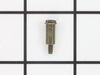
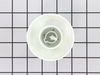
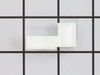
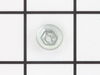
float leaking
float was missing palnut and letting the float slide up too much causing small leak around the float
Parts Used:
-
phillip from hodges, AL
-
Difficulty Level:A Bit Difficult
-
Total Repair Time:30 - 60 mins
-
Tools:Nutdriver, Screw drivers, Socket set
27 of 38 people
found this instruction helpful.
Was this instruction helpful to you?
Thank you for voting!
The basket in our dishwasher had many broken parts on the bottom and the silverware kept falling through
We were happy to find the basket we needed listed on your website, even after we could not find it on the Maytag site. It was perfect. I can't believe we lasted almost 2 years with the broken basket we had.
Parts Used:

-
Marge from Cranford, NJ
-
Difficulty Level:Really Easy
-
Total Repair Time:Less than 15 mins
21 of 23 people
found this instruction helpful.
Was this instruction helpful to you?
Thank you for voting!
Door was leaking badly
After performing some maintenance to get the water flowing properly through the system (that's another story) the door was leaking very badly during any test run of the dishwasher.
We thought it was the gasket because the old one was calcified and dried out from years of harder water.
We ordered the new one and in minutes after receiving the new gasket we had a firm seal and our dishwasher was back in action.
We thought it was the gasket because the old one was calcified and dried out from years of harder water.
We ordered the new one and in minutes after receiving the new gasket we had a firm seal and our dishwasher was back in action.
Parts Used:
-
Aimee from Mount Pleasant, MI
-
Difficulty Level:Really Easy
-
Total Repair Time:Less than 15 mins
21 of 24 people
found this instruction helpful.
Was this instruction helpful to you?
Thank you for voting!
Water was pouring out of dishwasher door
I googled the simptoms online, and found that the most common cause for a door leak was the door seal. I purchased the seal online from PartSelect.com. Two days later, the part arrived. I pulled out the old seal and pushed in the new one. No tools required. That fixed the problem. While looking at the parts diagram, I noticed that my dishwasher didn't have the water deflectors installed. I don't know if they were ever there. They were cheap, so I ordered them online and slid them into place in less than 10 seconds. Again, no tools required. Dishwasher runs great, no leaks.
Parts Used:
-
Walt from Woodbridge, VA
-
Difficulty Level:Really Easy
-
Total Repair Time:Less than 15 mins
20 of 24 people
found this instruction helpful.
Was this instruction helpful to you?
Thank you for voting!
Not enough water pressure to wash soap out of dispenser
Our first effort was to replace the lower washer arm that had splits in the sides of this plastic part. While this increased the water pressure in the wash cycle some it was not enough to adequately wash the dishes. We read that someone else had to clean out the filter which was below the lower washer arm assembly. Thus, we took off the loweer arm assembly by screwing off the hold down assembly in the middle of the arm. We then took off the pump cover by removing the 6 screws that hold it in place with a #3 metric allen wrench. When we took of the cover we could see that the pump filter was so covered with deposits that it was not letting the water through to the pump. Rather than spend hours trying to clean the filter and pump cover we decided it was easier to repalce them. Thus, we ordered the parts and replaced them. The dishwaster is now working fine. We appreciated the information that others had shared that helped us find and fix the problem.
Parts Used:
-
Duane from Las Vegas, NV
-
Difficulty Level:A Bit Difficult
-
Total Repair Time:30 - 60 mins
-
Tools:Pliers, Screw drivers, Wrench (Adjustable)
18 of 18 people
found this instruction helpful.
Was this instruction helpful to you?
Thank you for voting!
Pump gasket had deteriorated with age and causing odors.
The dishwasher is well engineered to perform this work.
Remove the bottom two panels to provide access and visibility to base of pump motor.
Locate plastic pump locking lever and push toward rear of DW to unlock pump from DW.
Inside the DW remove basketsand spray arms. Revove screws holding cover over pump motor and remove cover.
From below raise pump motor and support with block (piece of 2x4 worked well).
insde DW, removre old gasket, clean well around pump and botom of DW, install new gasket.
From below remove block to drop pump motro back into place, and re-tighten locking lever by pull toward you.
re-assemble inside componets, run through a rinse cycle to test for leaks and replace bottom panels.
I
Remove the bottom two panels to provide access and visibility to base of pump motor.
Locate plastic pump locking lever and push toward rear of DW to unlock pump from DW.
Inside the DW remove basketsand spray arms. Revove screws holding cover over pump motor and remove cover.
From below raise pump motor and support with block (piece of 2x4 worked well).
insde DW, removre old gasket, clean well around pump and botom of DW, install new gasket.
From below remove block to drop pump motro back into place, and re-tighten locking lever by pull toward you.
re-assemble inside componets, run through a rinse cycle to test for leaks and replace bottom panels.
I
Parts Used:
-
Kenneth from Brooks, GA
-
Difficulty Level:Easy
-
Total Repair Time:30 - 60 mins
-
Tools:Screw drivers, Socket set
17 of 17 people
found this instruction helpful.
Was this instruction helpful to you?
Thank you for voting!