



















RAS8445JQ0 Roper Washer - Instructions
Keep searches simple. Use keywords, e.g. "leaking", "pump", "broken" or "fit".
Clothes washer would not spin with more than a couple socks in it. It would barely spin when empty.
Diagnosing the problem was the toughest part. I originally called a repair man - described to him the problem and he said it was most likely the transmission (gearbox)... of course that is one of the most expensive parts! I asked him if it was maybe the clutch... he said there was no clutch.. only a brake... I knew he was wrong after researching. The fact that the washer would agitate fine and spin very light loads but not spin anything heavy told me it was NOT the gearbox.. or the brake.. it was the clutch.. it had to be... so I called the repair man and canceled the appointment I had made then ordered the clutch assembly. Showed up very quickly. Now to the repair. I realized that I did not have to take apart the cabinet section of the washer.. I only needed access to the bottom. My washer - a 5 year old Whirlpool Gold Ultimate Care II had just a piece of foam blocking off the bottom of the washer... Easy access... I disconnected the hot and cold water and the drain tube. I removed the hot and cold water tubes from the back of the washer also so they would not get crushed when I laid the machine on its back. I unplugged the washer also. The drain tube I left connected to the washer.. I was afaid of it getting crushed while on its back, so I bunched up a large towel put it on the floor and tilted the washer slowly back onto it... the towel was enough of a spacer to keep the drain hose from getting crushed. I used a couple pieces of Duct Tape to hold the lid shut while on its back. I then removed the foam insert on the bottom. Then I unplugged the wiring harness. and a single wire that had a spade connector in the same area. I then removed the clips from the plastic water pump and slid it off the motor (I used Duct Tape again to suspend the water pump up and out of my way while I proceeded) I did NOT have to remove the motor from the gearbox. I used a socket wrench and unbolted the 3 gearbox bolts. I was able to take the whole unit, gearbox and motor out in one piece.. it slid right out (you will have to unscrew the the bolt in the top of the agitator/dispenser shaft - then the gearbox unit with the shaft will slide right out, I did this before I put the washer on it's back) Once it was slid out, I removed the clutch then reinstalled the same way I took it off. The only hard part was the circular wire retainer install for the clutch. It CAN all be done .. I ended up using 2 screwdrivers to put the new retaining ring into the new clutch assembly.. One screwdriver would hold down part of the retaining ring and the other I used to continue pushing the ring into place.. don't give up! You will get it in.. even with normal tools (This was the hardest part of the whole install) It took me 5 minutes with some force and fiddling. I also swapped in the new plastic piece that came with the clutch assembly... you will see where it goes... the old plastic piece looked fine, but I changed it out anyways - it hooks the clutch to the brake system it looks like. After the new clutch assembly was installed I just put it all back together the way I took it apart. One thing I will add was I was not sure if the clutch had to be lined up when I slid the shaft back into the washer.. It does not have to be.. It will align itself automatically. You know when you hear that click/pop when the washer is about to spin?.. well that is that plastic piece engaging with the clutch... there was a piece or two that fell off the shaft when I had removed it.. While sliding the shaft back into the washer I had to just put the pieces back on the shaft before I put the bolt back into the top of the agitator/shaft...
Summary:
Get the washer on its back - unplugged!
remove wire(s) Harness from motor
remove water pump
unbolt 3 bolts holding the gearbox
slide gearbox and motor out as one piece ( a bit heavy)
remove and replace clutch assembly (pay attention to how things are removed)
Done! put it all back together... hope that helps. It worked perfect for me.. and m
Summary:
Get the washer on its back - unplugged!
remove wire(s) Harness from motor
remove water pump
unbolt 3 bolts holding the gearbox
slide gearbox and motor out as one piece ( a bit heavy)
remove and replace clutch assembly (pay attention to how things are removed)
Done! put it all back together... hope that helps. It worked perfect for me.. and m
Parts Used:

-
Shawn from Longmont, CO
-
Difficulty Level:Easy
-
Total Repair Time:30 - 60 mins
-
Tools:Pliers, Screw drivers, Socket set
257 of 266 people
found this instruction helpful.
Was this instruction helpful to you?
Thank you for voting!
Machine would stop on Rinse & Spin Cycle
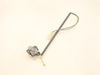
After troubleshooting the timer, found that the drum would spin if I manually pressed the lid switch with a screwdriver, then it wouldn't work at all. Unfortunately, there was a load of laundry and no way to drain the drum. I bypassed the lid switch (snipped the plastic switch off and twisted the wires). Put a small wire nut over the wires and taped the wire to the top of the machine with plenty of electrical tape so not to cause a shock. Finished that load and ordered the part. Followed advice from former story tellers and removed the two long screws that run down into the cabinet on both sides of the machine, followed by two smaller screws on the top corners of the control panel. Slide the whole panel towards the front of the cabinet about 1/4" and rotate it back over the back panel. The wire assembly will hold it from falling to the floor (watch the tubing that runs on the top edge). Located the plug that leads to the lid switch and pull up on the tab and wiggle it out. Push the tabs on the side of the connector on the cabinet and push it through (watch the metal edges). You will see two metal clips on the left & right top of the cabinet. Put a screwdriver in the notch on the front side and pop them off. Take note on how they are set in the two sides Place hands on both sides of the cabinet and pull towards you, it will rotate over and you can access the lid switch. Remove the two screws from the inside of the lid. Slide the wires & plastic casing off the two small clips on the rim & replace with the new switch. Be careful not to tighten too much cause you'll split the plastic mounting. Reverse the process and your back in business. I believe my lid switch broke due to excessive slamming of the washer lid. Hope this helps
Parts Used:
-
Michael from Homestead, FL
-
Difficulty Level:A Bit Difficult
-
Total Repair Time:15 - 30 mins
-
Tools:Nutdriver, Screw drivers
227 of 233 people
found this instruction helpful.
Was this instruction helpful to you?
Thank you for voting!
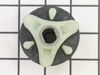
Broken Coupling
Very easy -
1. Removed hoses from the pump
2. Removed Wiring harness from the motor
3. Unscrewed saftey screws from both clamps which hold the motor against the motor bracket.
4. Using a screw driver I easily removed/pryed the clamps from the motor.
5. I then removed the broken plastic coupler from the motor shaft and installed the new one coupler.
6. I did the same thing on the clutch side.
7. I set the Rubber coupler in clutch side.
8. Put motor back on until couplers joined together.
9. Placed Brackets back on Motor (patience here).
10. screwed back saftey screws on clamps.
11. connected hoses back.
Thats it... 45 minutes at most .. Save me from having to buy a new easher. I was convinced I was going to have too until I peeked underneatch the washer and saw the rubber coupler on the ground...
1. Removed hoses from the pump
2. Removed Wiring harness from the motor
3. Unscrewed saftey screws from both clamps which hold the motor against the motor bracket.
4. Using a screw driver I easily removed/pryed the clamps from the motor.
5. I then removed the broken plastic coupler from the motor shaft and installed the new one coupler.
6. I did the same thing on the clutch side.
7. I set the Rubber coupler in clutch side.
8. Put motor back on until couplers joined together.
9. Placed Brackets back on Motor (patience here).
10. screwed back saftey screws on clamps.
11. connected hoses back.
Thats it... 45 minutes at most .. Save me from having to buy a new easher. I was convinced I was going to have too until I peeked underneatch the washer and saw the rubber coupler on the ground...
Parts Used:
-
Hugo from Frisco, TX
-
Difficulty Level:Really Easy
-
Total Repair Time:30 - 60 mins
-
Tools:Pliers, Screw drivers, Socket set
220 of 235 people
found this instruction helpful.
Was this instruction helpful to you?
Thank you for voting!
Machine rocking about like crazy on spin
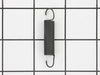
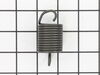
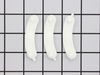
Took some online research to figure out how to get the cabinet off. Once inside I fitted the wear pads which were a breeze to remove using a knife blade to pry them up and removing them using the screwdriver. The springs were replaced one by one using strong fingers. The machine went through the spin cycle without any rocking or self-destruct noises.
Parts Used:

-
john from middle river, MD
-
Difficulty Level:A Bit Difficult
-
Total Repair Time:15 - 30 mins
-
Tools:Screw drivers
156 of 179 people
found this instruction helpful.
Was this instruction helpful to you?
Thank you for voting!
Gearcase oil leak
To replace gearcase seals, first disconnect the power cord. Turn off water supply and remove water inlet hoses at washer (safety first). You may want to have a bucket available to catch water that will drain out of the hot/cold and drain hoses. Next, remove top agitator cap, seal and (7/16”) bolt (see diagrams on PartSelect). This will allow the top agitator and cogs to be removed. Grab the bottom agitator and rock it back and forth until it can be removed.
Suggestion: now is a good time to remove and clean the old soap and junk from drain holes in the top agitator and any junk that may be under the lower agitator.
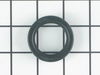
Lay the washer on its right side. You will now have access to the motor, pump, hoses clutch and gearcase. Place a couple of 2X4X(5?) blocks under the tub to support it. Remove the electrical connector from the motor (this is clipped into place) and the two wires that go to the capacitor on the motor.(TIP: don’t put your finger across these terminals, SHOCK HAZARD) Remove the hose clamps and hoses, the two screws (5/16”) on each strap that holds the motor in place, you may have to use a screw driver to pop the straps off the motor. Remove the motor and pump by pushing the tub to the left and move the motor and pump to the right to clear the coupling. If you have not replaced the drive coupling, now would be a good time to order and replace. With the motor out of the way, remove the three (½”) bolts holding the gearcase to the chassis and pull to remove gearcase and shaft. If you are only replacing the drive shaft seal, you do not need to open the gearcase case. Stand the gearcase so the input shaft is facing up, or what fluid is left in the gearcase will come out. One question I see a lot is how do you remove the seal. One, buy a real expensive tool that you will only use once, or take a screwdriver with about a ¼” blade, stick it between the shaft and the seal, gently leverage the seal out while going around the shaft. After the seal is removed, oil can be added thru the seal hole. Understand that different oils are designed for different applications. That said, I used 90 weight gear oil from the local auto parts store, you can add it thru the seal hole. To install the seal, lightly tape it into the seal cavity, then use a socket that is close to the diameter of the seal and gently drive it in.
If you have to replace the top case seal, it will require you to take the gearcase apart. The advantage of this is, if you have an older washer, you can clean out the contaminated oil and sludge and check for wear on the parts, and replace as needed from PartSelect. Here’s a suggestion: if you have a digital camera, take pictures, this will really help when you put things back together.
Now look at the diagram that is provide by PartSelect, remove the clutch, remove the bolts on the top cover, try to keep it level or you may have a mess on your hands. Lift the cover up over the shaft. I found the top case seal very stubborn to remove. Using a small screwdriver, get between the case and the seal and gently pry it out. Replace the seal, again, by using a socket and gently taping into place. There is also a seal at the top of the drive gear that you may want to replace to keep the oil from going up into the clutch. Now its time to clean all of the years of gunk out of the case and gears. When you are ready, fill the bottom half of the gearcase with oil, about half a quart. To seal the case, I used a ultra blue silicone gasket sealer in a tube from my local auto parts store or sealant can be purchased from PartSelect. I used it on the top half of the gearcase case. Slide the top case over the shaft and evenly tighten the bolts. Reinstall the clutch to the gearcase shaft and install into the washer. I found that the motor bearings needed to be lubed, so I used white lithium grease in an aerosol can. Reinstall motor and don’t forget to put the electrical plug back into the motor and the wires that go to the capacitor and pump h
Suggestion: now is a good time to remove and clean the old soap and junk from drain holes in the top agitator and any junk that may be under the lower agitator.
Lay the washer on its right side. You will now have access to the motor, pump, hoses clutch and gearcase. Place a couple of 2X4X(5?) blocks under the tub to support it. Remove the electrical connector from the motor (this is clipped into place) and the two wires that go to the capacitor on the motor.(TIP: don’t put your finger across these terminals, SHOCK HAZARD) Remove the hose clamps and hoses, the two screws (5/16”) on each strap that holds the motor in place, you may have to use a screw driver to pop the straps off the motor. Remove the motor and pump by pushing the tub to the left and move the motor and pump to the right to clear the coupling. If you have not replaced the drive coupling, now would be a good time to order and replace. With the motor out of the way, remove the three (½”) bolts holding the gearcase to the chassis and pull to remove gearcase and shaft. If you are only replacing the drive shaft seal, you do not need to open the gearcase case. Stand the gearcase so the input shaft is facing up, or what fluid is left in the gearcase will come out. One question I see a lot is how do you remove the seal. One, buy a real expensive tool that you will only use once, or take a screwdriver with about a ¼” blade, stick it between the shaft and the seal, gently leverage the seal out while going around the shaft. After the seal is removed, oil can be added thru the seal hole. Understand that different oils are designed for different applications. That said, I used 90 weight gear oil from the local auto parts store, you can add it thru the seal hole. To install the seal, lightly tape it into the seal cavity, then use a socket that is close to the diameter of the seal and gently drive it in.
If you have to replace the top case seal, it will require you to take the gearcase apart. The advantage of this is, if you have an older washer, you can clean out the contaminated oil and sludge and check for wear on the parts, and replace as needed from PartSelect. Here’s a suggestion: if you have a digital camera, take pictures, this will really help when you put things back together.
Now look at the diagram that is provide by PartSelect, remove the clutch, remove the bolts on the top cover, try to keep it level or you may have a mess on your hands. Lift the cover up over the shaft. I found the top case seal very stubborn to remove. Using a small screwdriver, get between the case and the seal and gently pry it out. Replace the seal, again, by using a socket and gently taping into place. There is also a seal at the top of the drive gear that you may want to replace to keep the oil from going up into the clutch. Now its time to clean all of the years of gunk out of the case and gears. When you are ready, fill the bottom half of the gearcase with oil, about half a quart. To seal the case, I used a ultra blue silicone gasket sealer in a tube from my local auto parts store or sealant can be purchased from PartSelect. I used it on the top half of the gearcase case. Slide the top case over the shaft and evenly tighten the bolts. Reinstall the clutch to the gearcase shaft and install into the washer. I found that the motor bearings needed to be lubed, so I used white lithium grease in an aerosol can. Reinstall motor and don’t forget to put the electrical plug back into the motor and the wires that go to the capacitor and pump h
Parts Used:

-
Greg from Hemet, CA
-
Difficulty Level:Easy
-
Total Repair Time:1- 2 hours
-
Tools:Pliers, Screw drivers, Socket set
150 of 166 people
found this instruction helpful.
Was this instruction helpful to you?
Thank you for voting!
The lid switch broke
Removal Steps
1.Unplug washer and pull away from wall 6 inches or so. (You will need space on either side to remove the cover.)
2.Release control panel: Unfasten two screws at corners of panel. Tilt backwards. Unfasten old lid switch wire coupling and push it downward.
3.Remove washer cover (top and sides): Remove clips at two corners under control panel. You should be able to gently lift and remove the cover.
4.Remove lid switch assembly: Unfasten two screws holding switch to washer top. Unfasten ground wire (using 8mm wrench). Use screwdriver to lift up two clips holding switch assembly.
Reassembly is reverse of removal. When replacing the cover, line it up so that the side edges of the cover sit on top of the rail and the front edge slides beneath the rail. I learned this the hard way, and, in fact, it is still not fastened securely.
1.Unplug washer and pull away from wall 6 inches or so. (You will need space on either side to remove the cover.)
2.Release control panel: Unfasten two screws at corners of panel. Tilt backwards. Unfasten old lid switch wire coupling and push it downward.
3.Remove washer cover (top and sides): Remove clips at two corners under control panel. You should be able to gently lift and remove the cover.
4.Remove lid switch assembly: Unfasten two screws holding switch to washer top. Unfasten ground wire (using 8mm wrench). Use screwdriver to lift up two clips holding switch assembly.
Reassembly is reverse of removal. When replacing the cover, line it up so that the side edges of the cover sit on top of the rail and the front edge slides beneath the rail. I learned this the hard way, and, in fact, it is still not fastened securely.
Parts Used:
-
Paul from Glendale, CA
-
Difficulty Level:A Bit Difficult
-
Total Repair Time:30 - 60 mins
-
Tools:Screw drivers, Wrench set
133 of 172 people
found this instruction helpful.
Was this instruction helpful to you?
Thank you for voting!
Would not spin unless helped
Turned off water supply, disconnected hoses so I could lay on its back.( drain hose also ) have something to catch all the water in. There will be some residual water so have something to wipe it up. Removed agitater, then I removed the spanner nut with hammer and punch. layed it on its back, removed the three mounting bolts that hold the gearcase to the tub support. Removed wire harness and ground wire , pulled gearcase and shaft out . Removed spin tube thrust washer, removed support ring from groove in shaft , removed retaining ring , slid clutch off shaft ,installed new clutch. Take care to watch how parts are removed so that they are installed in proper orientation. Since I had it this far apart I decided I should replace the coupling. I removed the two motor retainers , seperated coupling , pulled both halves off shafts , installed new halves , they go on a lttle tight , newer couplings have metal inserts , aligned coupling halves , inserted together , put motor retainers back on , tightened small screws,done.
Parts Used:
-
Ernest from Oakdale, CT
-
Difficulty Level:Easy
-
Total Repair Time:30 - 60 mins
-
Tools:Pliers, Screw drivers, Socket set
116 of 138 people
found this instruction helpful.
Was this instruction helpful to you?
Thank you for voting!
Water leaking on floor
I removed the two spring clips that hold the pump and two wire spring clips that hold the hoses. Then I had to pry the pump off the shaft (it was frozen with rust). Then I cleaned the shaft with sandpaper and installed the new pump (which, by the way, came the next day, thank you very much) which made my wife very happy, and I thank you for that , too.
Parts Used:

-
Stanley from Warwick, RI
-
Difficulty Level:Really Easy
-
Total Repair Time:15 - 30 mins
-
Tools:Pliers, Screw drivers
107 of 117 people
found this instruction helpful.
Was this instruction helpful to you?
Thank you for voting!
Cold Water would not shut-off
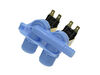
To discover what the problem was, I intially tested the inlet valve by blowing into both sides - discovering that the cold side was stuck in the open position. The hardest part was removing the back of the machine. First, you unscrew the top plastic part which contains the controllers by phillips head on either side. Then you pop the clips out with a large slot screwdriver, then at the bottom, a nutdriver or large slot screwdriver there are two nuts to remove. The valve itself took a small nutdriver and pliers to remove the hose. Took less than 20 mintues to complete repair. Washing works like new now.
Parts Used:
-
Wendy from Dunlap, CA
-
Difficulty Level:Easy
-
Total Repair Time:15 - 30 mins
-
Tools:Nutdriver, Pliers, Screw drivers
104 of 118 people
found this instruction helpful.
Was this instruction helpful to you?
Thank you for voting!
washing machine not agitating
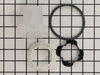
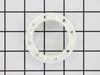
wife complained about washing machine making bad noise and she said it was not spinning. So being the good husband that I am, after she yelled at me 8-10 times I stopped what I was doing and sure enough she was right , the washing machine wasn't working correctly. Started testing the agitator by spinning it back and forth. it would only catch on the dogs every once in a while. the washer is only 3 years old, thought maybe one of the kids toys or lint was interferring with the dogs, pulled this dispenser off the top and then another plastic cap with a black o-ring off and found the agitator and dogs gears worn down and chipped. think it was a 3/8" socket I used, but you need a long extension to get to it. Part was labelled well and it was very easy to order. problem I had was when the new parts came in I had ordered the agitator repair kit ($16) and the thrust spacer ($5). Well it's not that $5 is alot of money but the spacer I had was worn and I was in there anyway so why not. The agitator repair kit comes with a thrust spacer but it was not shown on the otherwise very detailed pictures. So it would cost more for me to pay the shipping to return the unused part than not. the agitator repair kit description reads "This nine piece agitator repair kit comes with a two and a half inch cam, a thrust spacer, and four dogs (agitator dogs) but the thrust spacer is not shown. You could say I was 30% more into parts cost and make it sound worse. Had I been an actual repair man instead of a home do it yourself kind of person, probably would have known to call and speak with a rep vice going at it online solo. anyway, 5 minutes and the washer was back up, wife was happy, and I was able to continue with what i was originally doing.
Parts Used:
-
clark from paris, TN
-
Difficulty Level:Really Easy
-
Total Repair Time:Less than 15 mins
-
Tools:Nutdriver, Screw drivers
100 of 107 people
found this instruction helpful.
Was this instruction helpful to you?
Thank you for voting!
The washer would not stop filling.
I took everything apart and put in the new inlet valve. Tried to run the washer and it was still not stopping when filling. I looked more into it and the tube that comes up from the wash basin to the load size selector switch was disconnected and that was the real problem. If this happens to you, I suggest first looking under the control panel at the clear tube and ensuring that it is connected to the switch. Then if that is connected it is probably the inlet valve. There are helpful installation videos that can be found on the part select website that I would recommend looking at before taking things apart because it will make it much easier.
Parts Used:
-
Clay from Laramie, WY
-
Difficulty Level:A Bit Difficult
-
Total Repair Time:15 - 30 mins
-
Tools:Pliers, Screw drivers, Wrench set
101 of 110 people
found this instruction helpful.
Was this instruction helpful to you?
Thank you for voting!
Tub wouldn't turn, but motor would allow it to drain.
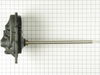
I took the two screws for the control panel out and tilted it up and back. Then remove the two metal clips which held the outer panel to the back panel. After disconnecting the power and water I tipped the washer on its back. I had to remove two clips to take the water pump off of the motor, then removed the two screws and clips which held in the motor. After removing the motor, I found the coupler was bad. To remove the gearcase, I took out the softener dispenser and removed one bolt to take out the agitator. Under the agitator was a clip. Three bolts held the gearcase to the frame. After removing them, the gearcase pulled straight out the bottom. Replacement was just a reverse process, with the addition of a light coat of grease to the gearcase shaft.
Parts Used:
-
Troy from Storm Lake, IA
-
Difficulty Level:Easy
-
Total Repair Time:30 - 60 mins
-
Tools:Nutdriver, Pliers, Screw drivers, Socket set
110 of 138 people
found this instruction helpful.
Was this instruction helpful to you?
Thank you for voting!
would not completely spin all the water out of clothes
I replaced the clutch and coupler. The clutch was well worn. My wife had washed three or four loads of heavy rugs and we think that was the cause of the premature wear. We now take the rugs to a commercial laundry. The coupler was OK but the new coupler has metal instead of plastic inserts so I decided to replace it while I had it torn apart. The machine is now running like it was new.
0.Disconnect supply hoses and electrical. Refer to the parts breakdown pictures on the PartSelect website. I refer to only the numbers so you may have to match the part to a particular diagram.
1. Remove the agitator by pulling up on the fabric softener dispenser #1. Clean out the excess liquid and "residual gunk". Grab one off the tabs of the plastic cap #23 and pull gently. The plastic cap (~ 3" in dia) is held in place by a rubber O-ring #24. The cap comes out easily exposing the bolt that holds the agitator to the drive shaft. Remove the bolt. and the agitator comes right out.
2. Turn the machine over on its front. You do not need to remove the back panel.
3. Get plenty of rags to soak up the water before you remove the hoses from the water pump #22 on the end of the motor. A quart or more remains in the pump and hoses. Remove the two hoses.
4. Disconnect the wiring harness from the motor#29. There is a small plastic "catch" on the bottom of the connector that must be lifted to remove the connector. It's kind of hard to see but it's there and it's part of the connector.
5. Remove the three bolts #10 that hold the gearcase #9 to the bottom of the tub assembly.
6. Remove the gearcase, the drive shaft, the motor, and the water pump as one unit. You will need to lift them a little to get clearance because the tub has settled down. Just lift the tub and all and pull the assembly out. Get them out to a spot where you have room to work on them. The water pump may still have bit of water.
7. Replacing the clutch. Remove the clutch parts from the bag and lay them out where you can see everything. Refer to the instructions in the bag to select the correct spring and to see how the keeper spring is installed. Remove the washer, keeper ring, and clutch assembly, and plastic clip#15 remembering the order and the orientation. Install the new clutch in reverse order.
8. You will have one plastic part #15 left over. It goes on the bottom of the tub after you remove a key ring.
9. Replacing the coupler. note the orientation of the water pump#22 and remove it by removing the two retainers #21. set it aside.
10. Remove the screws#23 and retainer clips#17. Separate the motor#20 from the gearcase#9 to expose the coupler. Replace the coupler, reattach the motor to the gearcase, and the water pump to the motor.
11. The reassembly is pretty much a reverse of the assembly.
0.Disconnect supply hoses and electrical. Refer to the parts breakdown pictures on the PartSelect website. I refer to only the numbers so you may have to match the part to a particular diagram.
1. Remove the agitator by pulling up on the fabric softener dispenser #1. Clean out the excess liquid and "residual gunk". Grab one off the tabs of the plastic cap #23 and pull gently. The plastic cap (~ 3" in dia) is held in place by a rubber O-ring #24. The cap comes out easily exposing the bolt that holds the agitator to the drive shaft. Remove the bolt. and the agitator comes right out.
2. Turn the machine over on its front. You do not need to remove the back panel.
3. Get plenty of rags to soak up the water before you remove the hoses from the water pump #22 on the end of the motor. A quart or more remains in the pump and hoses. Remove the two hoses.
4. Disconnect the wiring harness from the motor#29. There is a small plastic "catch" on the bottom of the connector that must be lifted to remove the connector. It's kind of hard to see but it's there and it's part of the connector.
5. Remove the three bolts #10 that hold the gearcase #9 to the bottom of the tub assembly.
6. Remove the gearcase, the drive shaft, the motor, and the water pump as one unit. You will need to lift them a little to get clearance because the tub has settled down. Just lift the tub and all and pull the assembly out. Get them out to a spot where you have room to work on them. The water pump may still have bit of water.
7. Replacing the clutch. Remove the clutch parts from the bag and lay them out where you can see everything. Refer to the instructions in the bag to select the correct spring and to see how the keeper spring is installed. Remove the washer, keeper ring, and clutch assembly, and plastic clip#15 remembering the order and the orientation. Install the new clutch in reverse order.
8. You will have one plastic part #15 left over. It goes on the bottom of the tub after you remove a key ring.
9. Replacing the coupler. note the orientation of the water pump#22 and remove it by removing the two retainers #21. set it aside.
10. Remove the screws#23 and retainer clips#17. Separate the motor#20 from the gearcase#9 to expose the coupler. Replace the coupler, reattach the motor to the gearcase, and the water pump to the motor.
11. The reassembly is pretty much a reverse of the assembly.
Parts Used:
-
Ron from bellbrook, OH
-
Difficulty Level:Easy
-
Total Repair Time:1- 2 hours
-
Tools:Nutdriver, Pliers, Screw drivers, Socket set
98 of 109 people
found this instruction helpful.
Was this instruction helpful to you?
Thank you for voting!
Acting like it was unbalanced
I thought I would find broken springs but everything looked good. Comments and video very helpful.I figured springs must be stretched or worn out ,so for the money I figured worth a try. Insallation went well, washingmachine runs like a new machine. Much better than spending money on a new one. Thanks
Parts Used:
-
Michael from Glenburn, ME
-
Difficulty Level:Easy
-
Total Repair Time:30 - 60 mins
-
Tools:Nutdriver, Screw drivers, Wrench set
93 of 98 people
found this instruction helpful.
Was this instruction helpful to you?
Thank you for voting!
Agitator had a terrible ratcheting sound when running in free-wheel mode during spin cycle.
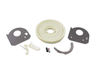
Removed the gearbox from the drum and removed the direct drive motor from the gearbox. Disassembled gearbox and drained gear oil. Rebuilt the neutral drive assembly with the ordered parts. Cleaned sealing surfaces. Filled gearbox with new gear oil. Sealed and re-installed the top cover to the gearbox. Reattached motor and then reinstalled assembly to drum and clutch (installed new clutch lining at this time as well).
Parts Used:
-
Adam from Lehi, UT
-
Difficulty Level:A Bit Difficult
-
Total Repair Time:1- 2 hours
-
Tools:Nutdriver, Pliers, Screw drivers, Socket set, Wrench (Adjustable), Wrench set
98 of 124 people
found this instruction helpful.
Was this instruction helpful to you?
Thank you for voting!