



















ESE9900 Maytag Washer Dryer Combo - Instructions
Keep searches simple. Use keywords, e.g. "leaking", "pump", "broken" or "fit".
Dryer door latch broken, using duct tape every time to dry clothes.
Piece of cake. Used flat screwdriver to pry out female part on cabinet side, same with the male part on door. Every new replacement part was tight and operated like new. Thanks Part Select, you'll be forever on my list of online parts buying.
Parts Used:
-
Scott from Palm Bay, FL
-
Difficulty Level:Really Easy
-
Total Repair Time:Less than 15 mins
-
Tools:Screw drivers
10 of 11 people
found this instruction helpful.
Was this instruction helpful to you?
Thank you for voting!
The fill cycles would start then stop suddenly
This was an easy repair.
1st I removed both water hoses
2nd I removed 1 hex head screw that released a backing plate & removed the plate holding the water inlet valve.
3rd I pulled the 4 electrical connections & loosened a clamp to remove a small water hose.
4th I removed 2 hex head screws that held the water valve to the backing plate.
-----------that was a whole 5 - 10 minutes!------------
Next I reversed the process
4th I attached the inlet valve with the 2 hex head screws
5th re-attached the 4 electrical connections(had slip on spades) pushed on the hose & tighterned the clamp.
6th replaced the backing plate with the inlet valve attached & tightened the single hex head screw.
7th re-attached the hot & cold lines................................DONE
15 minutes tops
1st I removed both water hoses
2nd I removed 1 hex head screw that released a backing plate & removed the plate holding the water inlet valve.
3rd I pulled the 4 electrical connections & loosened a clamp to remove a small water hose.
4th I removed 2 hex head screws that held the water valve to the backing plate.
-----------that was a whole 5 - 10 minutes!------------
Next I reversed the process
4th I attached the inlet valve with the 2 hex head screws
5th re-attached the 4 electrical connections(had slip on spades) pushed on the hose & tighterned the clamp.
6th replaced the backing plate with the inlet valve attached & tightened the single hex head screw.
7th re-attached the hot & cold lines................................DONE
15 minutes tops
Parts Used:
-
Peter from Aurora, IL
-
Difficulty Level:Really Easy
-
Total Repair Time:15 - 30 mins
-
Tools:Nutdriver, Pliers, Screw drivers
14 of 24 people
found this instruction helpful.
Was this instruction helpful to you?
Thank you for voting!
Leaking from under tub
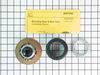
removed screws on front of washer, removed bolts holding top cover hinged back, nut driver to remove agitator, slipped agitator off, removed tub hoses, did not have special wrench to remove large nut on shaft, used punch and grinder to removed, had new large nut so wasn't concerned about damaging old one, pay attention to thread pattern to know how to turn, if you had special wrench job would be easier, removed spring bolts and took out inside drum and tub. cleaned corrosion and installed new seals, can be hard to slip on new seal, don't use grease, get dishwashing soap to use as lubricant to put on. Put back together and all is good.
Parts Used:
-
Reece from Joplin, MO
-
Difficulty Level:A Bit Difficult
-
Total Repair Time:More than 2 hours
-
Tools:Nutdriver, Pliers, Screw drivers, Socket set, Wrench (Adjustable), Wrench set
9 of 9 people
found this instruction helpful.
Was this instruction helpful to you?
Thank you for voting!
Smoking Washing Machine.
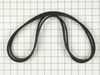
Well, I figured out a couple of things during this process. #1 The Washer was smoking. It had happened before (a sock got suck between the basket and the tub) so I assumed that happened again. I couldn't see anything in that space this time, so I dissasbemled the washer to see if any clothing was there. Relatively easy once finding the screws to remove the front panel. #2 What I found was a sock in the pump box. I disconnected the hoses and removed it, saw nothing between the basket and tub and ran it to see if problem corrected itself. It still was smoking. That is when I checked the belts, #3 first the pump belt, replaced it, very easy, just pulled the old one off, and wheeled the new one on. It still was smoking, #4 so I replaced the drive belt, very easy and the same as the pump belt. It still was smoking so I lubed the wheels for the belts, and #5 cleaned the residual rubber around the wheel from the old, fried, dry rotted drive belt. No more smoke!!! However #6 remember to leave space between the basket and the top of the tub, as when I put the washer back together the basket didn't spin. I removed the top and ran the spin cycle, it spun fine, reconnected and it didn't spin, the tub top was touching the basket, that's when I relized the top was on too tight. I reattached and left about 1/4 in of space and all is well now.
Parts Used:
-
Matthew from Wilmington, DE
-
Difficulty Level:Easy
-
Total Repair Time:15 - 30 mins
-
Tools:Nutdriver, Screw drivers, Socket set
10 of 12 people
found this instruction helpful.
Was this instruction helpful to you?
Thank you for voting!
Washer stopped working mid cycle restarts after resetting lid
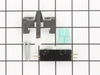
Repair went well, but my switch only had one contact on the non common end. The new switch had two contacts. One is for operation with lid open and one for lid closed. Make sure to connect to the lid closed contact and the common on the other end and leave the lid open contact unused.
Parts Used:
-
Eric from West Chester, PA
-
Difficulty Level:Easy
-
Total Repair Time:15 - 30 mins
-
Tools:Screw drivers
11 of 16 people
found this instruction helpful.
Was this instruction helpful to you?
Thank you for voting!
I broke the elbow when I pulled the washer too far from the wall for another repair.
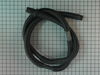
I removed 2 screws holding the front of the cabinet and set the front panel aside. Next I removed the screw securing the relay and water level switch to the front of the cabinet, and removed 4 screws holding the top of the washer to the cabinet. I removed the hose, then removed the 4 screws securing the siphon break to the rear panel and pulled it inside the cabinet. I removed the elbow and gasket, installed the new elbow and gasket, and reassembled all parts previously removed. I reconnected the hose and fastened it to the drain, and I was back in business. It took about 35 minutes.
Parts Used:
-
George from Smithfield, KY
-
Difficulty Level:Easy
-
Total Repair Time:30 - 60 mins
-
Tools:Nutdriver, Screw drivers
12 of 19 people
found this instruction helpful.
Was this instruction helpful to you?
Thank you for voting!
Washer did not drain.
Took front panel off. Ran machine. Pump is see-through. Could not see any "aeration" of the water in the pump and no water was coming out of drain hose. Disconnected electric. Disconnected hose from drum to pump(first emptied ALL water from drom)and drained in bucket. Disconnected drain hose from pump to drain and drained any water. Checked for obstructions in hoses. Removed pump. Checked belt (was fine after 14 years). Ordered new pump. Received the next day! Replaced pump and tighten belt. Connected hoses and test it. All OK. Replace panel and did laundry.
Parts Used:
-
Basil from St. Charles, MO
-
Difficulty Level:Easy
-
Total Repair Time:30 - 60 mins
-
Tools:Nutdriver, Socket set
9 of 10 people
found this instruction helpful.
Was this instruction helpful to you?
Thank you for voting!
Standing water in washer tub
Thinking the water pump was not doing its job in removing all of the water after the rinse cycle, I replaced the water pump.
1. Unplug washing machine.
2. Remove front cover (2 screws).
3. Pull belt and hoses off pump body (watch for water in drain hose!).
4. Remove 3 screws holding pump to bottom pan. 5. Reverse process with new pump.
This job is straighforward, and it helps to have 2 wood blocks to prop up the front of the washer.
Unfortunately, this didn't fix my problem. Actual cause of the water in the tub was a leaking inlet valve (solenoid assy).
1. Unplug washing machine.
2. Remove front cover (2 screws).
3. Pull belt and hoses off pump body (watch for water in drain hose!).
4. Remove 3 screws holding pump to bottom pan. 5. Reverse process with new pump.
This job is straighforward, and it helps to have 2 wood blocks to prop up the front of the washer.
Unfortunately, this didn't fix my problem. Actual cause of the water in the tub was a leaking inlet valve (solenoid assy).
Parts Used:
-
James from Baton Rouge, LA
-
Difficulty Level:Easy
-
Total Repair Time:30 - 60 mins
-
Tools:Screw drivers, Socket set
9 of 10 people
found this instruction helpful.
Was this instruction helpful to you?
Thank you for voting!
tub leaked
followed instructions elsewhere here. Procedure went flawlessly
To undo the nut I used a 1 1/2 " long x 5/16 bolt to hammer on.
STILL LEAKS. Needed PS2347235 =Tub Bearing Kit . Going back in...
THe remainder concerns the bearing procedure:
The 3 bolts holding the outer tub to the legs have rectangular washers. Those are not totally flat, and are marked for outside, top ... so pay attention. It might make a difference.
Outer tub came off the rubber bushing. Took some pulling the bushing off the shaft, and removing the sleeve bearing was a challenge at first, it would not move on the transmission shaft. Soaked with wd40 overnight. Drove it off with cold chisel (driving upward). For re-attaching the 3 tub bolts I used a ratchet tiedown strap to pull the 3 legs together to get enough thread to start, what with all those washers and things.
Ran spin cycle dry for 3 minutes as per instructions before filling with water. Success.
To undo the nut I used a 1 1/2 " long x 5/16 bolt to hammer on.
STILL LEAKS. Needed PS2347235 =Tub Bearing Kit . Going back in...
THe remainder concerns the bearing procedure:
The 3 bolts holding the outer tub to the legs have rectangular washers. Those are not totally flat, and are marked for outside, top ... so pay attention. It might make a difference.
Outer tub came off the rubber bushing. Took some pulling the bushing off the shaft, and removing the sleeve bearing was a challenge at first, it would not move on the transmission shaft. Soaked with wd40 overnight. Drove it off with cold chisel (driving upward). For re-attaching the 3 tub bolts I used a ratchet tiedown strap to pull the 3 legs together to get enough thread to start, what with all those washers and things.
Ran spin cycle dry for 3 minutes as per instructions before filling with water. Success.
Parts Used:
-
Fritz from Redway, CA
-
Difficulty Level:A Bit Difficult
-
Total Repair Time:1- 2 hours
-
Tools:Nutdriver, Pliers, Screw drivers, Wrench (Adjustable), Wrench set
8 of 8 people
found this instruction helpful.
Was this instruction helpful to you?
Thank you for voting!
Motor needed replacing (even though it was only 8 years old!)
In addition to the other helpful suggestions:
The key to replacing the motor is to remove the motor while it is still clipped in to the bracket (after removing the blower assembly, of course.) Don't remove the tumbler and belt thinking it will give you clear access to the rear clip, because it won't.
Removing the bracket is not complicated. There are two screws that are fairly easy to access and keep the bracket in place (refer to parts diagram for location); when the screws are removed, out comes the motor assembly (after disconnecting the wires, of course.) This is the only way to get access to the two clips that hold the motor to the bracket.
As for those pesky clips, I was able to use a flat screwdriver in one hand and vice grips in the other to pry off the clips. After a few tries, working on one end of the clip, I was able to apply quite a lot of downward pressure without braking the end of the clip. If anyone has another suggestion....
Putting the clips back on was much easier. First, remount the motor to the bracket, making sure to rotate the motor to the 2 o'clock position so you can re-attach the ground wire (or else you'll have to unclip the motor again, like I did!) Then re-attach the clip on one side. With the clip aligned properly, bear down with a flat screw driver on the other end of the clip. A swift knock with a hammer on the top of the screwdriver will easily re-attach the clip. Repeat with the second clip.
If you proceed carefully and patiently, this job can be accomplished without specialized tools or expertise.
The key to replacing the motor is to remove the motor while it is still clipped in to the bracket (after removing the blower assembly, of course.) Don't remove the tumbler and belt thinking it will give you clear access to the rear clip, because it won't.
Removing the bracket is not complicated. There are two screws that are fairly easy to access and keep the bracket in place (refer to parts diagram for location); when the screws are removed, out comes the motor assembly (after disconnecting the wires, of course.) This is the only way to get access to the two clips that hold the motor to the bracket.
As for those pesky clips, I was able to use a flat screwdriver in one hand and vice grips in the other to pry off the clips. After a few tries, working on one end of the clip, I was able to apply quite a lot of downward pressure without braking the end of the clip. If anyone has another suggestion....
Putting the clips back on was much easier. First, remount the motor to the bracket, making sure to rotate the motor to the 2 o'clock position so you can re-attach the ground wire (or else you'll have to unclip the motor again, like I did!) Then re-attach the clip on one side. With the clip aligned properly, bear down with a flat screw driver on the other end of the clip. A swift knock with a hammer on the top of the screwdriver will easily re-attach the clip. Repeat with the second clip.
If you proceed carefully and patiently, this job can be accomplished without specialized tools or expertise.
Parts Used:
-
ian from new york, NY
-
Difficulty Level:A Bit Difficult
-
Total Repair Time:More than 2 hours
-
Tools:Pliers, Screw drivers, Socket set
9 of 11 people
found this instruction helpful.
Was this instruction helpful to you?
Thank you for voting!
Noise in dryer
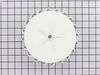
How to disassemble the dryer has been covered in past repair stories. I will add a make shift repair that will get you up and running until you get your replacement blower wheel. We repair gas dryers for a living and this repair works and some machines are still running for two years. Remove the blower wheel. Cut a piece of plumber strap of similar sized metal to about 3/16" x 1/2". Hold it with vise grips and then heat it with a torch. When it is hot melt it into the hole in the blower wheel. This will give you a flat spot in the shaft hole that will keep the blower from spinning on the motor shaft. Some trial and error fitting is involved. If you do it carefully the blower wheel will fit very nicely and will not vibrate or make noise.
Parts Used:
-
Joseph from Hampton bays, NY
-
Difficulty Level:Easy
-
Total Repair Time:30 - 60 mins
-
Tools:Nutdriver, Pliers, Screw drivers, Socket set, Wrench set
8 of 8 people
found this instruction helpful.
Was this instruction helpful to you?
Thank you for voting!
replace failed valve
Of couse, turn off water to machine. Remove hoses. Then had to open unit - easiest by popping spring in with flat blade in seam under lid. Screws holding valve are on back of unit at hose inlet, so simply unscrew to remove failed valve. Clamp holding hose onto valve is crimped with pliers to remove. I suggest spending the 50 cents a hardware store for new clamp, as my reattachment of existing clamp onto new value leaked. There are four electrical connectors, so remember order in which you removed them and return to same on new unit.
Reassemble in reverse (hoses, water on) and your all set.
Pretty easy: I figure it would be about $200 for service guy and part. My cost: $30 and 30 minutes
Reassemble in reverse (hoses, water on) and your all set.
Pretty easy: I figure it would be about $200 for service guy and part. My cost: $30 and 30 minutes
Parts Used:
-
Robert from Geneva, IL
-
Difficulty Level:Easy
-
Total Repair Time:15 - 30 mins
-
Tools:Screw drivers
8 of 8 people
found this instruction helpful.
Was this instruction helpful to you?
Thank you for voting!
Floor floded when washer started.
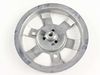
Thirty year old Maytag washer. Remove two screws at bottom of front panel with Philips screw driver. Hinge panel up to disconnect front panel from top of machine. Tilt washer back against wall to gain access to pulley at underside of washer. Then remove Philips head screw from bottom of center shaft. Remove bevel washer with screw. Remove stop block from end of center shaft and wind the pulley off center shaft. Clean center shaft of any debris and lightly coat with grease. Install belt on new pulley and motor, wind new pulley on center shaft. Replace stop block, washer, screw, and front cover.
Parts Used:
-
Keith from Big Sur, CA
-
Difficulty Level:Easy
-
Total Repair Time:15 - 30 mins
-
Tools:Screw drivers
9 of 12 people
found this instruction helpful.
Was this instruction helpful to you?
Thank you for voting!
Small puddle of water on floor after water drains out.
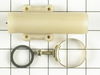
I first removed the 2 screws at the bottom of the front panel. The front panel then pulls up and off. I then removed 2 hex head screws with a small socket, which kept the top attached to the two side panels. I then lifted the top and kept it propped up. I removed the internal drain hose from the siphon break on the inside of the back panel. I removed the 4 screws on the back panel that keeps the siphon break in place. I removed it and screwed in the new one. I re-attached the drain hose to the new part. I partially filled the tub and watched it drain with the lid still upright. No more leaks. The rubber seal in the siphon break had rotted.
Parts Used:
-
James from Lakewood, CA
-
Difficulty Level:Easy
-
Total Repair Time:30 - 60 mins
-
Tools:Screw drivers, Socket set
9 of 13 people
found this instruction helpful.
Was this instruction helpful to you?
Thank you for voting!
Washing machine was leaking water from the bottom.
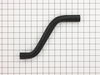
Hardest part was figuring out how to access the internals (not through the back or the top) It turns out there are two screws on the lower front of the machine, not easily found, which when removed allow the front panel of the machine to swing to front and out of the way allowing full access to the internals from the front. The water was comming from one of two water pump hoses. The hose was held in place with 1" hose clamps and was easily changed out.
Parts Used:
-
Pedro from Portland, TX
-
Difficulty Level:A Bit Difficult
-
Total Repair Time:30 - 60 mins
-
Tools:Pliers, Screw drivers
7 of 7 people
found this instruction helpful.
Was this instruction helpful to you?
Thank you for voting!