














5KSM195PSBBT5 KitchenAid Mixer - Overview
Sections of the 5KSM195PSBBT5
[Viewing 4 of 4]


Keep searches simple, eg. "belt" or "pump".

Worm Gear
PartSelect #: PS11748374
Manufacturer #: WPW10112253
This worm gear is an inch and a half in diameter. It is used for some of Whirlpool's brands of mixers.
$26.60
In Stock

Wire Whip Mixer
PartSelect #: PS11746928
Manufacturer #: WP9704329
This wire whip is for stand mixers.
Wire whip attaches to the beater shaft and incorporates air into cream, eggs and frostings.
Follow the instructions in the owner's manual for using and installing this part.
$45.93
In Stock

Mixer Worm Gear & Bracket
PartSelect #: PS11740516
Manufacturer #: WP240309-2
Used for Kitchenaid Mixers.
$54.95
In Stock

Dryer Retaining Ring
PartSelect #: PS11746909
Manufacturer #: WP9703438
This metallic retaining ring is less than an inch in diameter. It is made entirely of metal.
$10.95
In Stock

Mixer Retaining Pin
PartSelect #: PS11746974
Manufacturer #: WP9707223
This part works in conjunction with the worm and bevel gear.
$12.49
In Stock

Mixer Speed Control Plate
PartSelect #: PS11748567
Manufacturer #: WPW10119326
Used in Mixers.
$32.95
In Stock


Mixer Lower Bearing
PartSelect #: PS11738699
Manufacturer #: WP16897
Used on Stand Mixers.
$11.95
In Stock

Mixer Screw Cap
PartSelect #: PS11749932
Manufacturer #: WPW10191926
Use with stand mixers. Screws are not included. Cap only.
$31.95
In Stock

Speed Governor
PartSelect #: PS11753017
Manufacturer #: WPW10330804
Also known as a clutch.
$30.95
In Stock

Cap Hub Chrome
PartSelect #: PS11775314
Manufacturer #: W11048596
Give your stand mixer a clean, finished look with this chrome hub cap. It covers the attachment port when you're not using accessories, keeping dust out and protecting the inside. It’s easy to install...
$20.82
In Stock

Mixer Shaft & Pinion
PartSelect #: PS11740499
Manufacturer #: WP240210-2
Used with stand mixers.
$24.95
In Stock
Common Symptoms of the 5KSM195PSBBT5
[Viewing 3 of 3]Noisy
Fixed by
these parts
these parts

Show All
Touchpad does not respond
Fixed by
these parts
these parts


Show All
Grinding or squealing sound
Fixed by
these parts
these parts
Show All
Keep searches simple. Use keywords, e.g. "leaking", "pump", "broken" or "fit".
motor would run but mixer wouldn't operate: broken worm gear
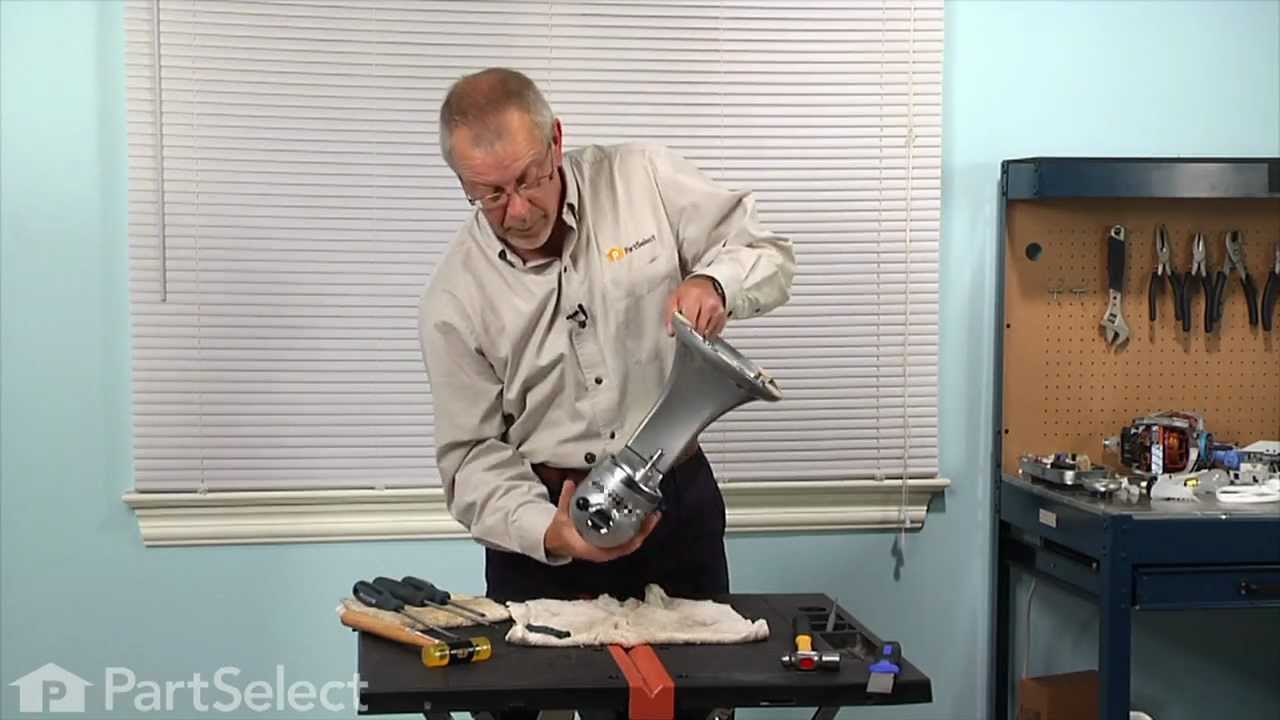
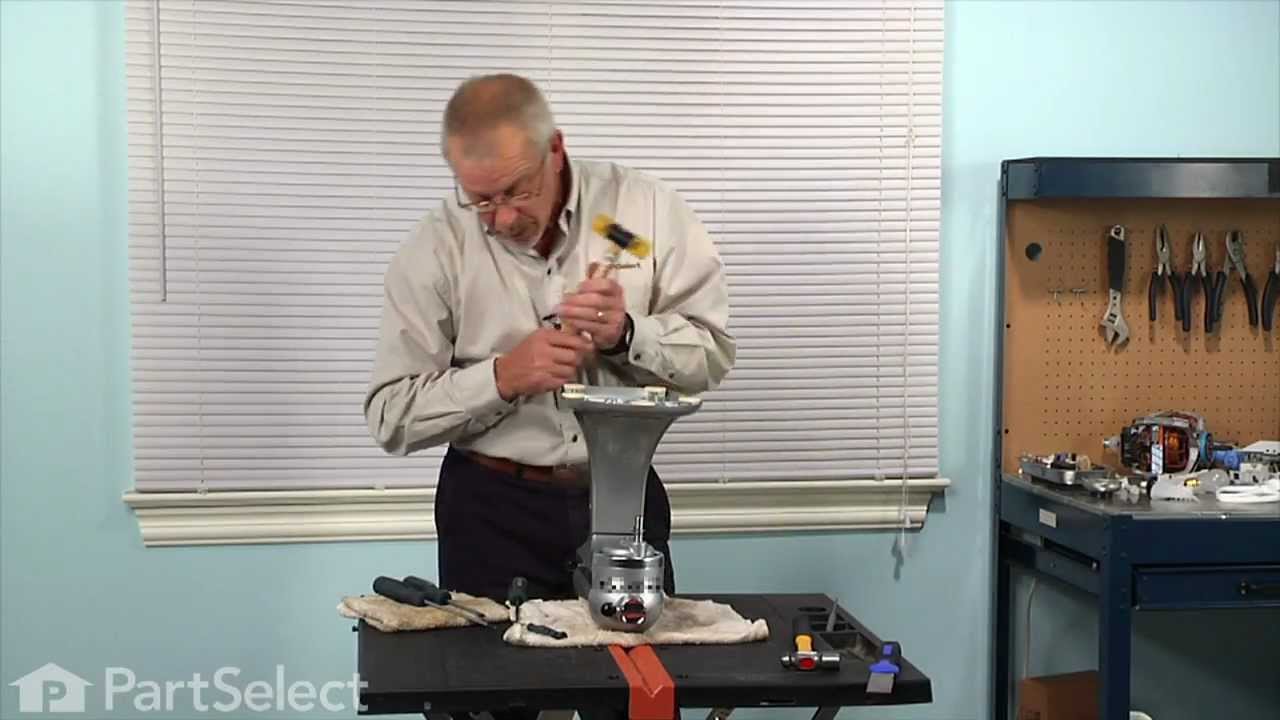
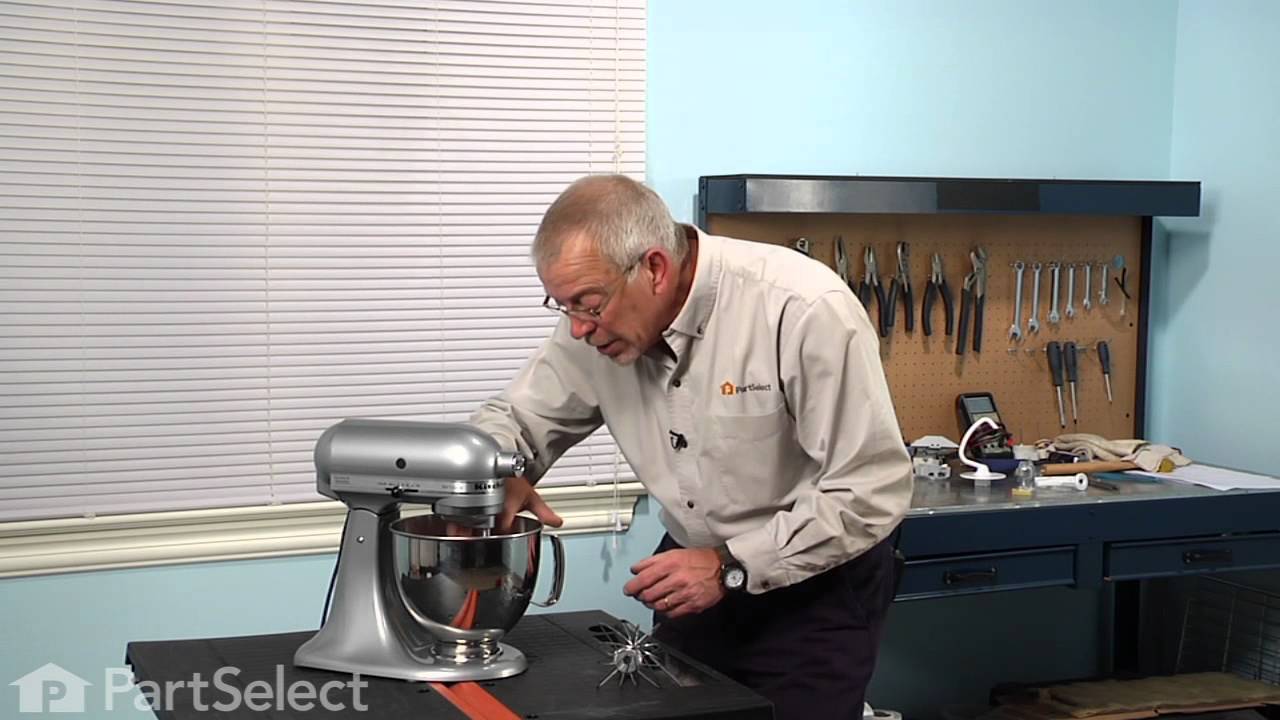
My girlfriends' stand mixer failed when the accessory drive cap fell into the mixing bowl and jambed the beater, spliting the worm gear. The teeth on this gear are made of nylon and are molded to an aluminum center. This part is designed to fail in situations like this, saving the more expensive transmission parts. Following a repair manual I found online, I first removed the rear cover and pulled out the cord strain relief out from the base. Next I removed the drip cup from around the base of the planetary drive. I then used a pin punch to drive out the pin holding the planetary to the center shaft and removed the planetary. The unit was then inverted and I removed 4 screws holding the bottom cover to the gear case, and the 5 screws from around the planetary drive. The bottom cover was then lifted off. Three screws holding the worm gear bracket in place were then removed and the worm gear assembly lifted out. A small pin holds the worm gear to the shaft. I drove this out with a small pin punch and the shaft and worm gear were then removed. There is also a thrust washer on this shaft, and it's location is important. Make a note for re-assembly. The new gear was installed and the entire process reversed for re-assembly. A successful repair completed! My girlfriend would have replaced this $200 appliance, but I was able to repair it for less than $30 including shipping.
Parts Used:
-
Raymond from Shirley, MA
-
Difficulty Level:Easy
-
Total Repair Time:30 - 60 mins
-
Tools:Screw drivers
88 of 94 people
found this instruction helpful.
Was this instruction helpful to you?
Thank you for voting!
wire whip for mixer broke,
-
Henry from Glasford, IL
-
Difficulty Level:Really Easy
-
Total Repair Time:Less than 15 mins
39 of 43 people
found this instruction helpful.
Was this instruction helpful to you?
Thank you for voting!
No action for the attachments for cutting/chopping.
I removed the rear cap, decorative strap, and decorative ring. Next I drove out the pin holding the mixing head. I then removed the 9 screws holding on the motor/gearing portion. This facilitated removal of the gearing from the motor assembly. I next laid in the new gears and calculated what thickness of fiber washers were needed to hold the gears in place. Reassembly was in reverse order of dissassembly.
Parts Used:

-
David from Goodlettsville, TN
-
Difficulty Level:A Bit Difficult
-
Total Repair Time:1- 2 hours
-
Tools:Screw drivers
46 of 70 people
found this instruction helpful.
Was this instruction helpful to you?
Thank you for voting!