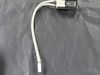
This igniter helps light your cooktop burner by creating a spark. If your burner isn’t lighting, this part might be the fix. It’s made from durable ceramic and metal and is easy to install—just unplug...
This wire oven rack provides a stable, flat surface for baking, roasting, and cooking, ensuring even heat distribution throughout the process. Designed for durability and a precise fit, it helps organ...
This genuine temperature sensor ensures precise heat regulation inside your oven for consistent cooking results and improved safety. Designed to measure the oven cavity temperature, it communicates wi...
Update your stove with this durable replacement knob. It gives you smooth control over heat settings and restores a neat, finished look. If your old knob is broken or hard to turn, this part is an eas...
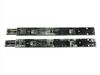
If your warming drawer isn’t sliding open like it used to, this push-to-open slide kit might be just what you need. It lets you open the drawer with a simple push—no handle required—making it super co...
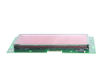
Need a new display module for your Bosch, Thermador, or Gaggenau appliances? You're in the right place! We have the authentic Bosch Display Module that's built specifically for these brands. This impo...
If your oven isn’t lighting or takes too long to heat up, this hot surface igniter might be the fix. It helps your oven start quickly and run efficiently by heating up and lighting the gas burners. Ma...
Getting to the igniter is trivial, only requiring the removal of the stove bottom (two set screws) and a heat shield (the heat shield is held in place by screws with size 20 star-driver heads). At this point a splice could be made to the original wires, IF ceramic wire nuts were included with the replacement igniter (but, alas, they are not). IF a splice were made the repair would be a very easy, 10-minute job.
To replace the igniter then requires the complete removal of the back of the range (17, size 20 star-driver, screws, if I remember correctly), plus the removal of an additional heat shield (one more screw). Then one must carefully lift and free the back from tabs on both sides that are set into slots. (Oh, and you probably want to loosen the electrical cord shield that interferes with the back coming off.) The new igniter wire plug is only then very easily re-attached to existing harness. Everything is then replaced to finish the repair.
None of this is difficult, if you don't mind moving your range away from the wall and dealing with on the order of 20 screws. Personally, I think I would have rather found an igniter with ceramic wire nuts to splice to the original wires (certainly not as elegant as replacing igniter and wires entirely, but far quicker and easier).
Watch the YouTube video. Turn off power or unplug the range. Remove 5 gas control knobs. Remove four T20 screws on Control panel. one on each end, L and R, two underneath, L and R. Pull off control panel and carefully flip it up onto the range, being careful not to stretch the wiring harness. Carefully remove two wiring connectors (pinch and pull method) Remove four T20 screws securing the Control panel mount then turn it over 180 degrees. Straighten the mounting tabs until the control panel easily slides off of its mount. Remove and replace the control panel and sheet. Reverse the procedure to reinstall. It took me longer to clean the components and the area that to repair the problem. Tip: Isopropyl alcohol in a spray bottle and a cloth cuts the grease and grime, if needed, with very little effort and no scratching.