



















79642198900 Kenmore Washer - Instructions
Keep searches simple. Use keywords, e.g. "leaking", "pump", "broken" or "fit".
Washing machine was leaking
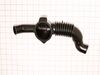
Contacted LG customer service, not much help there. Watched a very helpful Utube video on how to find and repair the leak. The video suggested that the most common leak is in the drain hose with bellows. Removed the rear panel and removed the bellows unit using pliers for the clamps and screwdriver for the bellows part. This was pretty easy. The rubber bellows was leaking in the exact same place as the youtube video showed. This is a Design Flaw that LG needs to fix. Ordered the new part and installed the bellows portion of the part first, as the angle for that installation needs to be correct. Then attempted to install the end of the hose (very inaccesible) to the pump drain. Very difficult to position the factory supplied spring clamp with pliers so I purchased a screw-type clamp (using the nut-driver rather than a screw-driver to tighten the clamp was helpful) at the local hardware store and that made my job much easier. Note: My unit is mounted on a pedestal, so it was a little easier to access the part location (about one foot off the floor, rather than at floor level), but it may be that the part should be replaced from the bottom of the unit, which would make it much easier to access. Then I installed the other end of the hose to the drain line using a screw-type clamp. I am 69 years old, and not that flexible anymore, so getting down on the floor to reach inside the unit was difficult. You need patience to do this job and you have to make sure all the clamps are properly installed so you don't start the machine up and end up with another leak. For me, this process was difficult and took more than two hours to complete. Limited access to the area made it more difficult and I hate the factory clamps they use. Overall, the repair costs about $25, compared to the $125 just to come look at the machine, then more money to fix the unit. It was satisfying to complete the repair for a small amount of money, but not sure it was worth the aggravation.
Parts Used:
-
Rod from Camano Island, WA
-
Difficulty Level:Difficult
-
Total Repair Time:More than 2 hours
-
Tools:Nutdriver, Pliers, Screw drivers
Was this instruction helpful to you?
Thank you for voting!
Water was leaking out the bottom
Followed the manufacturers instructions to disassemble the washer from the top. There was a video on youtube of a guy who was able to replace his bellows hose from the back, but maybe my arms weren't long enough, I couldn't reach all the way to the front. The washer was pretty easy to take apart, except for taking off the top, where there were 2 extra screws not mentioned in the instructions. Replacing the part was really easy. HERE'S THE MOST IMPORTANT PART: LG DOESN'T MENTION IT IS REALLY HARD TO GET THE CLAMP ASSEMBLY BACK ON THE GASKET WITHOUT A SPECIAL TOOL. You can buy the special LG tool, or you can do what I did (and others on the internet) and buy an $8 "Brake spring spreader" tool at your local auto parts store. Repair was a success. No more water leaking!
Parts Used:
-
Andrew from San Mateo, CA
-
Difficulty Level:A Bit Difficult
-
Total Repair Time:More than 2 hours
-
Tools:Pliers, Screw drivers
Was this instruction helpful to you?
Thank you for voting!
Leaking Hot Water Intake Valve
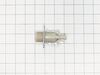
I received the part needed within a few days from ordering. I immediately removed the leaking part with the new part. It was a very simple install, and my washer is now leak free. If you think you cannot do these simple changes, think again, it's much easier then you may think. Remove the top cover of your washer machine by taking off the two screws in the back. Remove the hose clamp with a pair of pliers and pull off from the intake valve, of course make sure your water valve is shut off before starting. Remove the two prong clip. Using your pliers, disconnect the main hot water hose. Use a Phillips screwdriver to remove the two screws that holds the valve in place. Remove and discard it and replace with the new valve. Follow the steps and your done, it's that easy....TC
Parts Used:
-
Thomas from Commack, NY
-
Difficulty Level:Easy
-
Total Repair Time:30 - 60 mins
-
Tools:Pliers, Screw drivers, Wrench (Adjustable)
Was this instruction helpful to you?
Thank you for voting!
Washer not draining & grinding sound when it hit the drain cycle
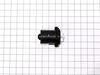
Followed the instructions that a fellow DIYer posted in PartSelect and a few I watched on Youtube. Pull out the detergent drawer, remove the back screws, slide the top off, unclip the control board, unplug Power & One more switch so that I could move it aside. Take the gasket retention wire off the door gasket & tuck it inside. Remove the screws in the bottom & top. Then slide the front panel, including the door up (not easy) and out. The part received was only the pump motor so I had to take a few pictures before so I knew I got it together right. Remove drain houses, pump screws, slide pump back and remove pump. A few more screws to remove the pump from the housing & replace with new pump. Put it all back together. It works! It only took about 45 minutes
Parts Used:
-
Robert from Odessa, FL
-
Difficulty Level:A Bit Difficult
-
Total Repair Time:30 - 60 mins
-
Tools:Screw drivers
Was this instruction helpful to you?
Thank you for voting!
Hole worn in bellows over time
UNPLUG WASHER.Unscrew 4 screws holding silver plate at back of unit. Remove plate to expose inside of unit. Locate drain hose at bottom of washer tub. Hose connects at front drain, bottom of tub, and at rear at the pressure sensor. Front and rear simply slide clamps down by grasping clamp tabs and sliding clamp off connection point. Disconnect from tub bottom by loosening main clamp with Phillips screwdriver and pulling downward. Have a towel handy as there will be water in the hose, and it will pour out when removing it from the unit. Installation is the reverse of removal. ATTACH THE HOSE ASSEMBLY TO THE DRUM FIRST, THEN FRONT, THEN LASTLY REAR. This order is the easiest way, otherwise you will spend extra minutes trying to get the tub connection to seat properly. Plug it back in (duh), then you're good to go for another 4 years or so until another hole wears in the hose. I have performed this repair on 3 different units, with 4 years being the average lifespan of this part.
Parts Used:
-
Jamison from Elk Grove, CA
-
Difficulty Level:Easy
-
Total Repair Time:30 - 60 mins
-
Tools:Pliers, Screw drivers
Was this instruction helpful to you?
Thank you for voting!
drain pump stopped working due to water in the case
ordered part from Part Select and it was here very quickly,but the part came damaged (not the fault of Part Select). I ordered another one and PartSelect had it here the next day. I watched the video on how to replace it and it was very helpfull.The particular part I replaced (pump motor) does not seem very durable. I will buy an American made washer the next time I need one. I will use Partselect in the future and recomend it to others.
Parts Used:
-
David from Mt. Pleasant, TX
-
Difficulty Level:Easy
-
Total Repair Time:30 - 60 mins
-
Tools:Pliers, Screw drivers
Was this instruction helpful to you?
Thank you for voting!
The drain pump impeller broke away from the pump.
We drained the water from the washer via the tiny hose/filter located at the lower left corner of the washing machine. The unit was then pulled away from the wall, unplugged and the hoses disconnected. At this time, we used the wet dry vacuum to suction the water that remained in the drain hose. We tilted the washing machine back until the front of the unit was 18 inches or so off the floor. We used the foot stool to hold the washer up in the air so that we could work on the pump. Replacing the pump was as easy as removing a few screws, unplugging the electrical connections and removing the faulty pump assembly from the plastic housing. (Be sure to mark what connector goes in what terminal). Re-assemble. Re-connect. You are ready to go. It took more time to ready the washer than it did to replace the part.
Parts Used:
-
PAMELA from DE SOTO, MO
-
Difficulty Level:Easy
-
Total Repair Time:30 - 60 mins
-
Tools:Nutdriver, Screw drivers
Was this instruction helpful to you?
Thank you for voting!
Washer would not drain
Tipped the washer on its side to expose the bottom, removed the plastic lid adjacent to the pump after removing the screws holding it , then, using a flat head on a pry tab pulled out the pump, removed the hoses with pliers to complete the extraction, swapped the pump on my bench. . assembly is reverse of disassembly. .
Parts Used:
-
Eugenio from West Valley City, UT
-
Difficulty Level:Really Easy
-
Total Repair Time:30 - 60 mins
-
Tools:Pliers, Screw drivers
Was this instruction helpful to you?
Thank you for voting!
Water would not drain from the washer
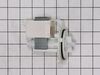
Another friend of mine did the repair.I watched him remove the old Drain pump and Motor Assembly and the Circulation Pump Motor.He installed the new parts in 45 to 60 minutes. The washer works like a new one. I had never ordered from Parts Select before. I was amazed how fast I received the new parts. Order placed on line on Friday , received the order at my home on Saturday afternoon.I will tell my friends about Parts Select and I will buy from them in the future.
Parts Used:

-
George from LaFollette, TN
-
Difficulty Level:Really Easy
-
Total Repair Time:30 - 60 mins
Was this instruction helpful to you?
Thank you for voting!
Tub filling with water when washer off.
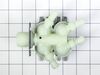
1) Shut off water supplies 2) Unplug 3) Disconnect water supplies from back of washer -some water will dribble out 4) Unscrew 2 screws at back of washer top plate (the lower of the two screws on each of the plastic bumpers) 5) slide top plate back a couple inches, then lift off. 6) Carefully stuff a towel underneath the distribution hoses and valves to catch any water that escapes during replacement. 7) Snap a photo of the entire area to help identify where the hoses and electrical connections are located to aid in re-connection (or label with tape). Be sure to note the color coding on the wires in relation to how they connect to the valves. 8) Pull the electrical connector(s) off the valve assembly 9) Use pliers to loosen and slide the hose clamps off as many of the hoses as possible and pull the hoses off the valve assembly. Some hoses are hard to reach, and can be removed after the valve is detached from the washer housing. 10) Unscrew the two screws from the back of the washer body holding the valve in place. 11) Remove the valve (and any remaining hoses). 12) Attach distribution hoses to new valve 13) Place new valve into washer body and screw into place. 14) Reattach electrical connection(s). 15) Remove towel and check for any stray water 16) Place top cover on washer and slide forward to lock in place. 17) Replace screws in top cover at rear of washer (unless you plan on checking for leaks after testing) 18) Reattach water supply hoses 19) Turn on water supplies 20) Plug washer in 21) Run washer self-test to check that all water inlets operate -see note at end 22) Check for leaks at water inlet hose connections and underneath washer OPTIONAL but ADVISABLE: check for internal leaks - 23) Unplug washer 24) Remove top cover 25) check for leaks at distribution hose connections 24) Replace top cover 25) Secure screws in top cover 26) Plug in washer NOTE: Washer self-test instructions: Turn washer off. Press and hold the SPIN SPEED and SOIL LEVEL buttons simultaneously, then press POWER button. Keep holding SPIN SPEED and SOIL LEVEL buttons until buzzer sounds twice. Release buttons. Press START/PAUSE button 4 times to test prewash inlet and listen for sound of water entering the washer. Press START/PAUSE button again for main wash inlet, press again for hot inlet, press again for steam inlet, press again for bleach inlet. Press 4 more times to get to drain cycle and watch for water to drain from tub (if any visible). Press 3 more times to turn test off. Power off washer to reset.
Parts Used:
-
Michael from Indianola, WA
-
Difficulty Level:Easy
-
Total Repair Time:30 - 60 mins
-
Tools:Pliers, Screw drivers
Was this instruction helpful to you?
Thank you for voting!
Kept getting suck on rinse cycle, filing machine with water, valve was sticking in the open position.
Replaced the 4 valave unit and single hot water valve at same time. Unplug unit, remove two plastic tabs on back of washer, push on top from front to losen. tur off both water valves, remove two screws holding valves in place, mark with tape which hose goes to which vavle, < back left, back righ, front left, front right, and write in electrical plugs the same. Hot water vavle is by itself, mark it anyway>. install new vavles, replace hoses, and eletrical plugs on top. Make sure clamps are all the way forward and tight! > leave top off. turn on water and electrical, run one short cycle to check for operation and leaks, if ok, replace top and back screws. Simple job, saved me $375.00 doing it myself.
Parts Used:
-
Antonie from Orlando, FL
-
Difficulty Level:Easy
-
Total Repair Time:30 - 60 mins
-
Tools:Pliers, Screw drivers, Wrench set
Was this instruction helpful to you?
Thank you for voting!
Pool of water under washer after a run
Did the repair entirely from the back.- 4 screws back cover comes off. Once you see the Bellows it is obvious what needs to come off and there are other videos on the net showing this. The main things I did differently were 1) Leaned the washer forward and placed 3 2x4 blocks of wood under each back leg. This allowed me to reach under the washer with one hand, and through the back with the other. You need both hands in there ! 2) Uninstalling is easy with just pliers. But on the way back in, I used a pair of Locking Pliers to keep the circular clamp squeezed as much as possible. That seemed the only way to get the bellows back in. Another option would be to switch to screw on Pipe clamps instead of the spring clamps.
Parts Used:
-
Daraius from AUSTIN, TX
-
Difficulty Level:A Bit Difficult
-
Total Repair Time:30 - 60 mins
-
Tools:Pliers, Screw drivers
Was this instruction helpful to you?
Thank you for voting!
door would not lock
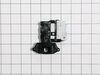
Used a screwdriver to carefull lift the top of washer. Reached in and unplugged old assembly from wir harness. Unscrewed old one (2 screws) from washer screwed in new one connected it to wire harness. Closed top of washer and plugged it in and it was ready to use. I am a 53 year old female and had never done this before. The repair shop wanted $150 to install part plus the part cost more from them. I' m sure a guy could do the job in 15 minutes or less.
Parts Used:
-
Eileen from Allen Park, MI
-
Difficulty Level:A Bit Difficult
-
Total Repair Time:30 - 60 mins
-
Tools:Screw drivers
Was this instruction helpful to you?
Thank you for voting!
Leaking Hot Water Inlet VBalve
Turn off hot water supply and activate a cycle on the washer momentarily, with hot water selected on front panel options to relieve hose pressure. Slide washer out to gain access to rear of unit. Unplug washer from AC source. Using pliers, remove washer supply hose from washer-side of the line (water may drain from hose) Remove single Phillips screw at bottom of each nylon lid holder at rear. Using a plastic putty knife, place between front panel and top lid to loosen lid and slide to rear. Remove lid and store aside. Hot and cold inlet valves sit side-by-side at top rear of the unit. Disconnect connector from valve by pulling gently away from valve plug prongs and place to the side. Using pliers, compress hose clamp and move to lower section of hose. Carefully rotate hose back and forth to remove from assembly. Inlet valve is held to washer body rear with 3 small Phillips screws. Remove first 2 and then while holding inlet valve body, remove final screw to free inlet valve assembly. Replace with new assembly by reversing these steps.Make certain when supply hose is reconnected, it is firmly tightened but DO NOT over tighten. Test washer by running a cycle to ensure there are no leaks.
Parts Used:
-
JOEL from BIXBY, OK
-
Difficulty Level:Easy
-
Total Repair Time:15 - 30 mins
-
Tools:Pliers, Screw drivers
Was this instruction helpful to you?
Thank you for voting!
Drain pump making noise and water wasn't being pumped out
I watched a video of how to replace the pump and it showed taking the top and front off to get to it. I actually found this could be done by removing the back panel from the washer. There were two hose clamps you have to squeeze and slide up and two wires going to the pump. There are three screws holding the pump that need to be removed from the front of the washer. Once these are removed all you have to do is push a tab down and the motor slide right out. The pump assembly can also be reached from the bottom of the washer.
Parts Used:
-
richard from rustburg, VA
-
Difficulty Level:Easy
-
Total Repair Time:15 - 30 mins
-
Tools:Pliers, Screw drivers
Was this instruction helpful to you?
Thank you for voting!